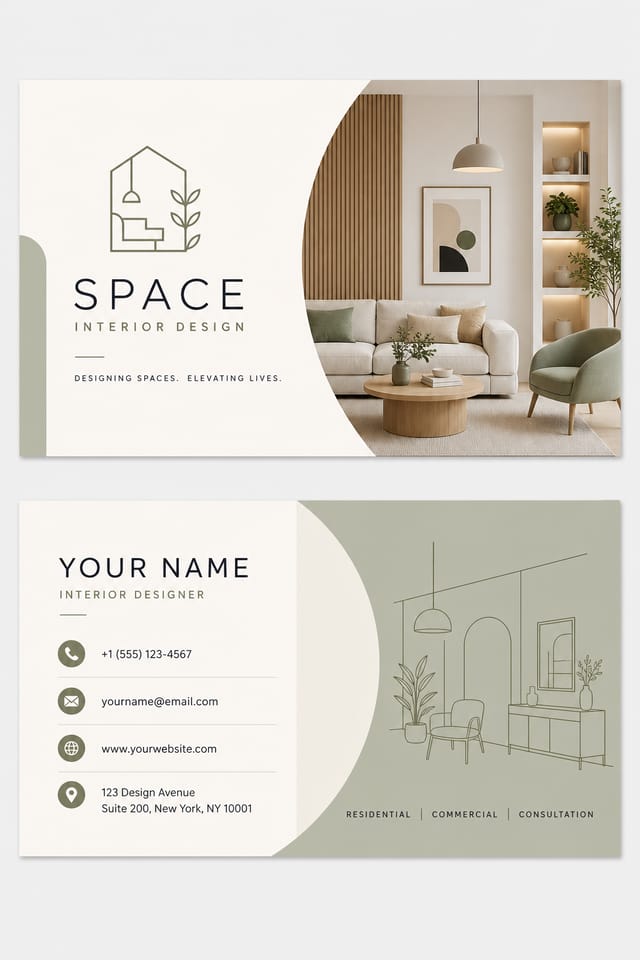
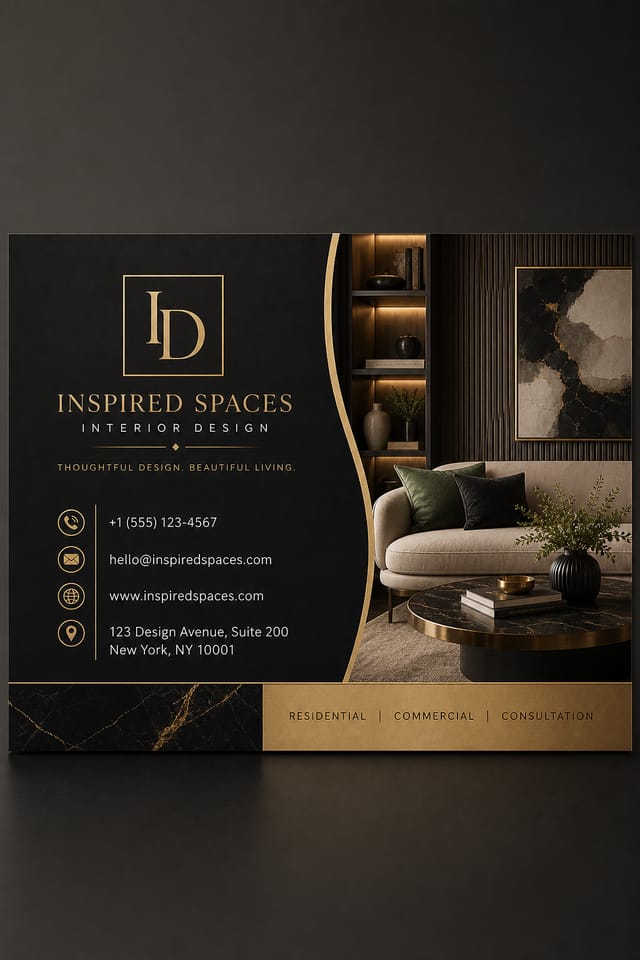
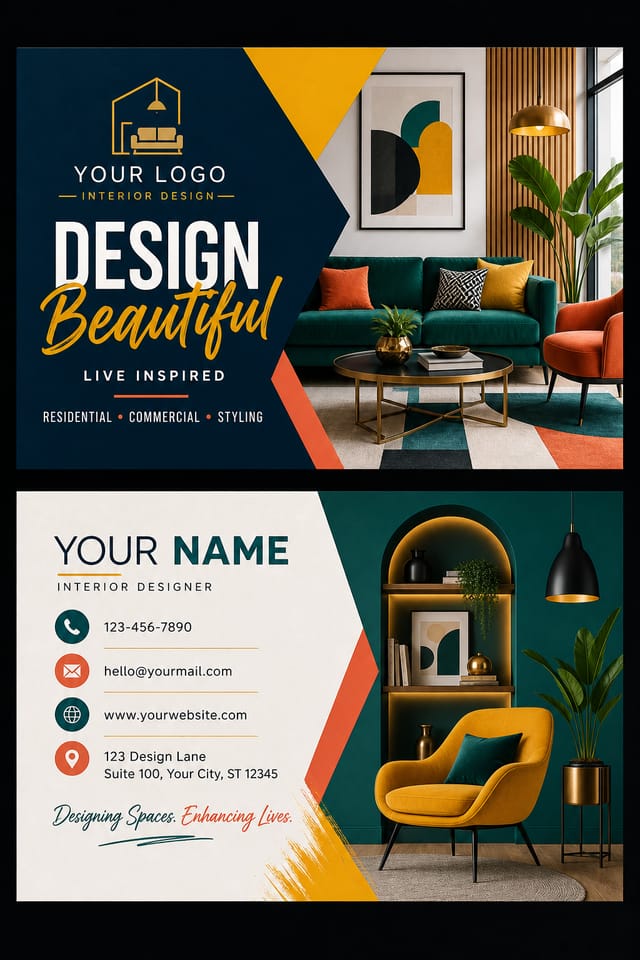
Interior Design Business Card : Create Free Interior Design Business Cards in Minutes with AI
Create Custom Interior Design Business Cards Quickly with Pixazo Best AI Interior Design Business Card Maker. Try for Free!
Get Started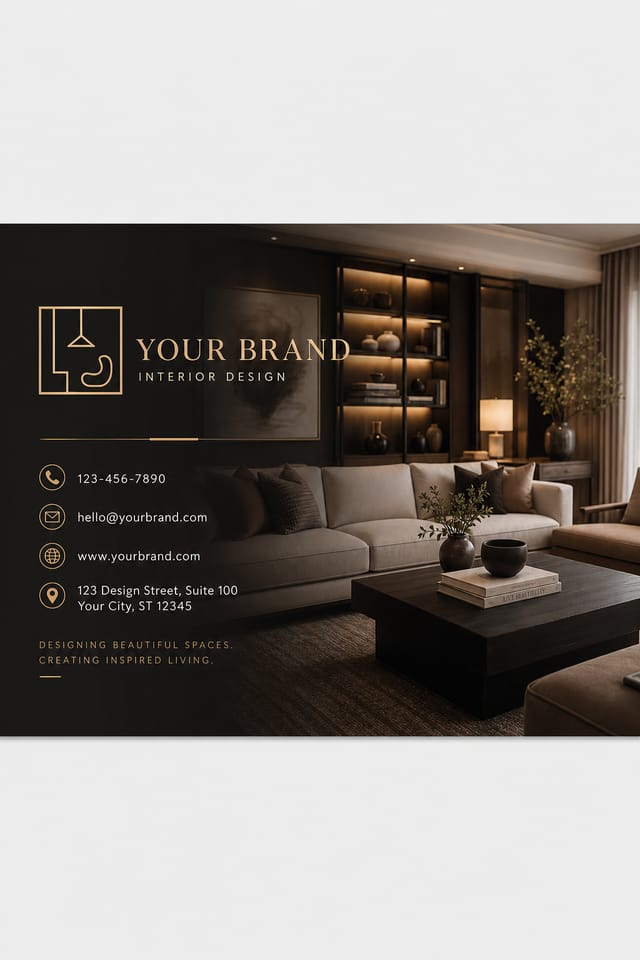
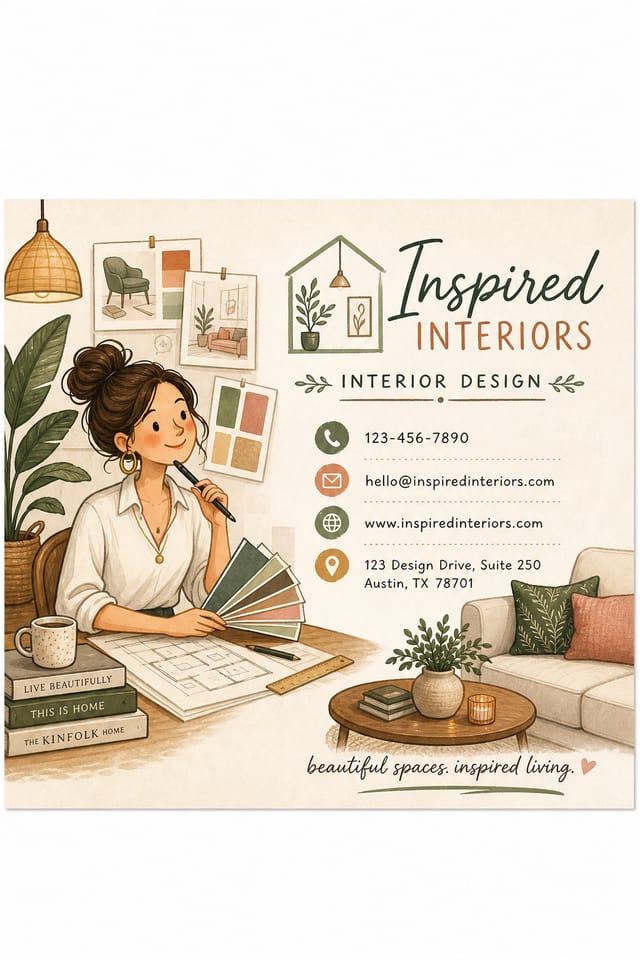
The Interior-Design Business-Card Framework: AI Interpretation
The Interior-Design Design Approach: How Pixazo Handles It
Interior-Design business-card design has its own visual conventions that differ significantly from other styles.
The AI recognizes these patterns and applies them when generating your design, rather than defaulting to a generic layout.
When you describe a interior-design business-card, Pixazo selects typography, color relationships, and compositional approaches appropriate to interior-design aesthetics.
The result is a design that looks like it belongs in its context, not a repurposed template with the wrong visual DNA.
Who Creates Interior-Design Business-Cards: Where They Fit
Travel and Tourism Promotion
Design interior-design business-cards for destinations, tour packages, and hospitality brands. Aspirational visuals that inspire booking decisions.
Non-Profit Campaigns
Create compelling interior-design campaign business-cards without allocating budget to design production. Focus resources on mission-critical activities.
Small Business Marketing
Produce interior-design marketing business-cards without a design agency budget. Get professional results from a text description.
Retail and Hospitality
Produce interior-design in-store and venue business-cards that communicate quality through design. Interior-Design aesthetics signal attention to customer experience.
How Interior-Design Business-Card AI Works: Behind the Scenes
Draft the Concept
Write a prompt describing your interior-design business-card. Include style preferences, color direction, the most important text to display, and any specific visual elements you want. The more specific your description, the more targeted the output.
Critique the Draft
Pixazo generates your interior-design business-card in seconds. Review the design and adjust your prompt to refine specific elements: change the color palette, shift the layout weight, or add visual elements you want included.
Wrap It Up
Export your interior-design business-card in the format you need. PNG for web and social, PDF for print production, JPG for email and lightweight sharing. The file is yours to use commercially without restrictions.
Interior Design Business Card Specifications
Watch: Creating Interior Design Business Card designs step by step
The Interior-Design Business-Card Feature Set: Capabilities Explained
Print-Ready Output
Generated interior-design business-cards are sized and structured for professional printing. Download high-resolution files ready for production.
Color Temperature Control
Specify warm, cool, or neutral color direction for your interior-design business-card. The AI builds the full palette around your temperature preference.
Style-Accurate Generation
The AI interprets interior-design design conventions and applies them to your business-card, producing output that looks correctly styled rather than generically templated.
Background Variation
Generate interior-design business-cards with different background treatments. Solid, gradient, textured, or pattern backgrounds all available for interior-design style.
The Interior-Design Business-Card AI Edge: The Difference
Multi-Format Export
Export your completed interior-design business-card in the format that fits your workflow. PNG for web, PDF for print, and JPG for universal compatibility.
Professional Output Quality
Every interior-design business-card is generated at production quality with proper resolution, color space handling, and typography rendering suitable for both digital and print use.
Interior-Design Business-Card Style Movements: Styles Gaining Traction
Brutalist Design
Raw, intentionally unpolished interior-design business-card aesthetics with stark contrasts and unconventional layouts are carving a niche in creative industries.
Organic Shapes
Flowing, irregular forms are replacing sharp geometric shapes in interior-design business-card backgrounds and decorative elements for a softer visual feel.
Gradient Overlays
Smooth color transitions are being used as primary design elements in interior-design business-card work, adding depth without the complexity of photographic backgrounds.
Data-Driven Visuals
Incorporating charts, statistics, and structured data directly into interior-design business-card layouts helps communicate complex messages at a glance.
Dark Mode Aesthetics
Dark backgrounds with high-contrast accents are increasingly common in interior-design business-card design, reducing visual fatigue and adding sophistication.
Practical Interior-Design Business-Card Tips: Practical Guidance
Leave White Space
Resist the urge to fill every area of your interior-design business-card. Breathing room around key elements makes the overall design more effective.
Limit Your Color Palette
Stick to 2-3 primary colors in your interior-design business-card design. Too many colors compete for attention and weaken the visual hierarchy.
Match Tone to Audience
A interior-design business-card for a corporate event needs a different visual tone than one for a music festival. Let the audience guide your style choices.
Test at Actual Size
Always preview your interior-design business-card at the dimensions it will be displayed. Design details that look fine at 100% can disappear or crowd at real-world scale.
The Fundamentals of Interior-Design Business-Card: Professional Standards
Tested Interior-Design Business-Card Prompt Inspiration
Copy any prompt below and paste it into Pixazo to generate your design instantly.
Editorial-style interior-design business-card, text-dominant design, typographic treatment carries visual weight, layout proportions inspired by print publication designInterior-Design business-card with strong visual hierarchy, largest element reads clearly, supporting elements organized by importance, clean background treatmentGeometric interior-design business-card, structured grid system, angular composition, colors in blocks rather than gradients, modern clean finishHigh-impact interior-design business-card, immediate visual read at thumbnail size, clear headline dominance, supporting information structured logicallyAtmospheric interior-design business-card, background treatment supports the headline without competing with it, visual weight distributed intentionallyTwo-color interior-design business-card design, high contrast between primary and secondary color, clean separation between graphic and text zonesThe Interior-Design Business-Card Gallery: Spotlights and Showcases
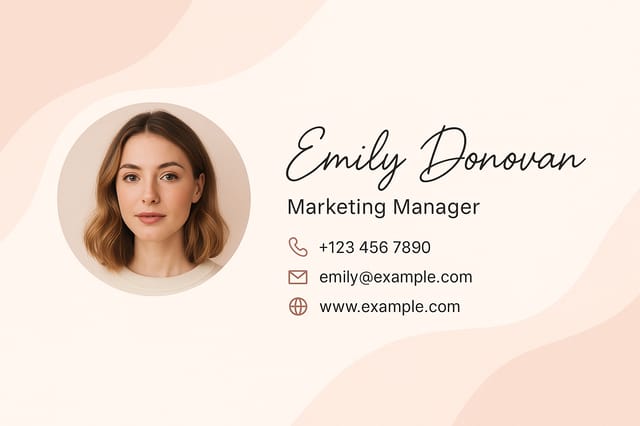
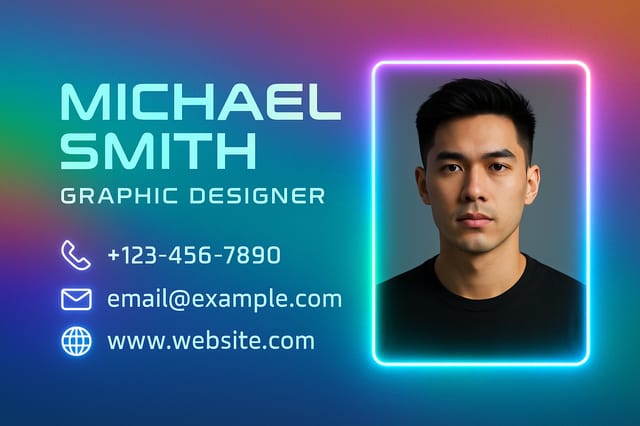
Real creators sharing their interior design designs made with Pixazo AI.

The Reality of Interior-Design Business-Card AI: Trade-Offs to Know
Known limitations and trade-offs of AI-generated interior design design. Every AI design tool has boundaries. Knowing these limits before you start helps you get the most out of interior-design business-card generation.
Interior-Design Business-Card Maker: Common Questions Answered
Pixazo works in any modern mobile browser. The interface adapts to phone and tablet screens so you can generate interior-design business-cards from anywhere. A dedicated mobile app is in development for an even smoother on-device experience.
The AI recognizes interior-design design as a distinct visual category with its own conventions. Specifying interior-design style in your prompt triggers appropriate design decisions around color, typography, and composition rather than defaulting to generic poster layout.
The AI generates visual designs, not data visualizations. For interior-design business-cards that need charts or graphs, generate the interior-design layout in Pixazo and overlay your data graphics in post-production. The design framework will be style-consistent even if data elements are added separately.
Brand kits let you save your logo, fonts, and color palette so every interior-design business-card you generate stays on brand. Once configured, the AI applies your brand parameters automatically alongside interior-design style conventions.
Canva uses fixed templates you customize manually. Pixazo generates original interior-design business-card designs from your description, so every output is unique. For interior-design work specifically, the AI applies style-specific design decisions rather than offering generic drag-and-drop templates.
Longer, more detailed prompts generally produce more accurate results for interior-design business-card design. Include all the relevant information: style direction, color preferences, content to display, intended use, and any specific design elements you want. There is no strict character limit.

