Music Flyer : Create Free Music Flyers in Minutes with AI
Create Custom Music Flyers Quickly with Pixazo Best AI Music Flyer Maker. Try for Free!
Get Started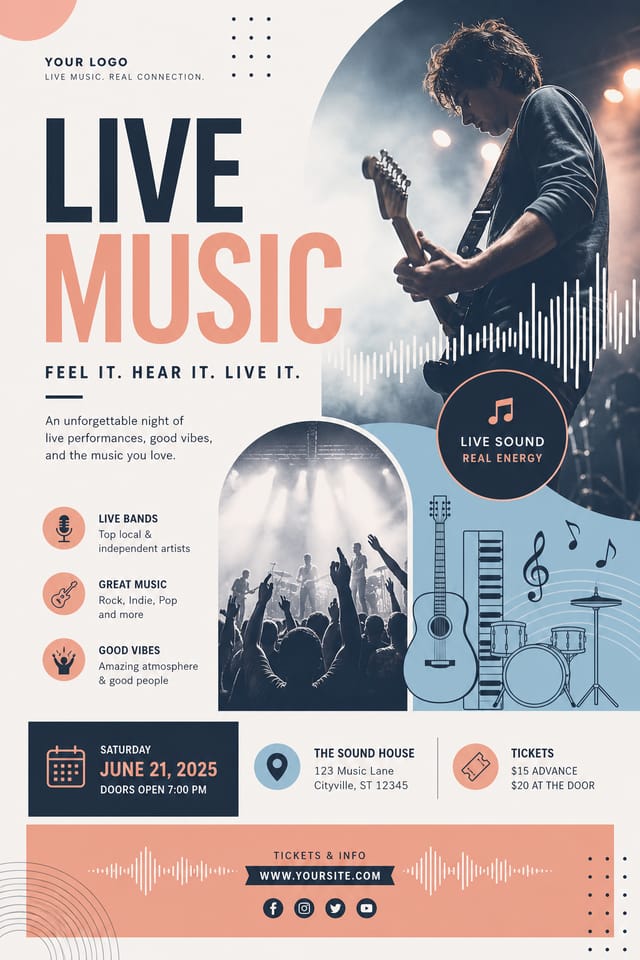
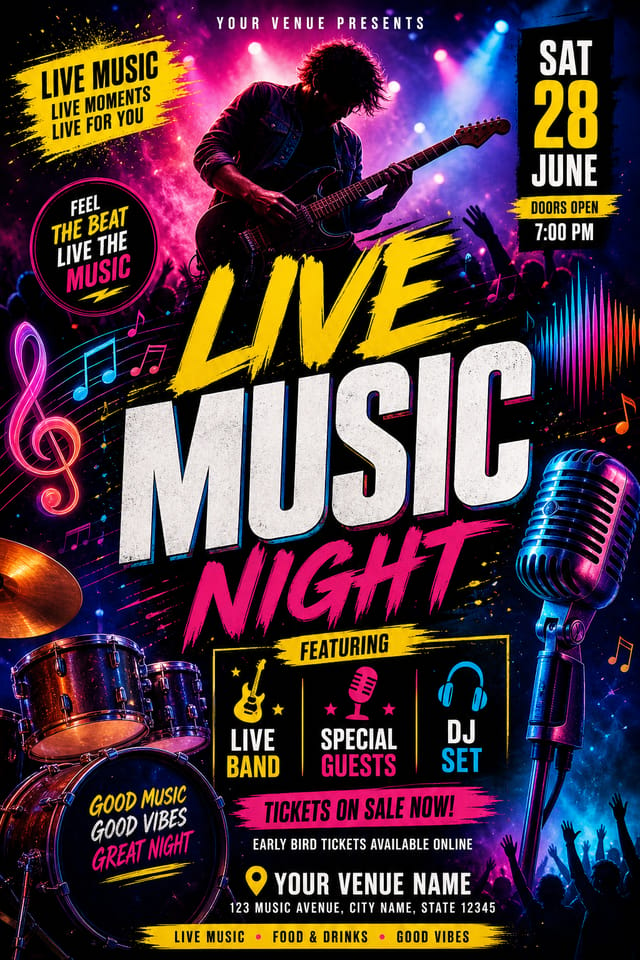
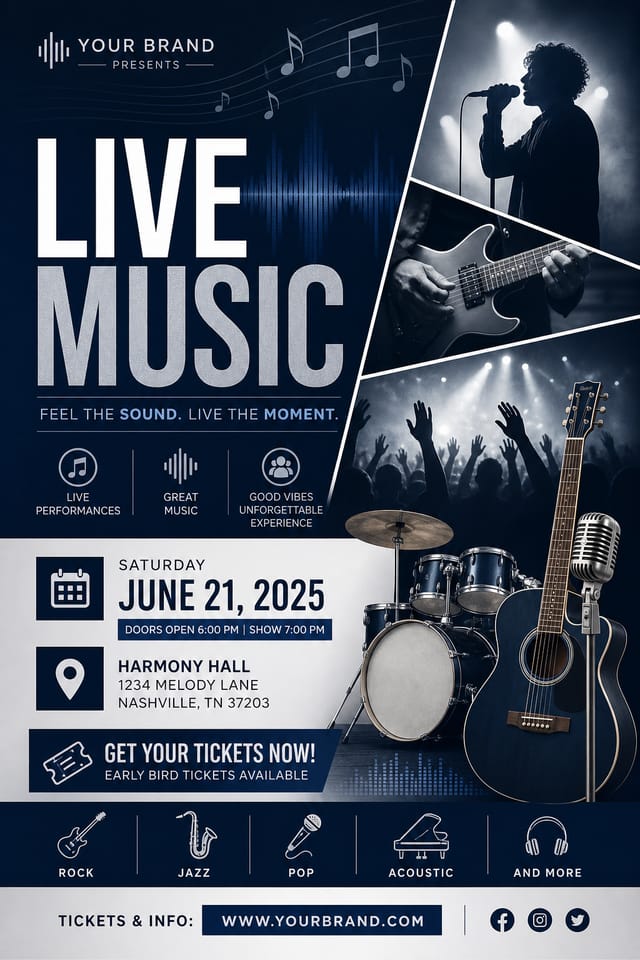
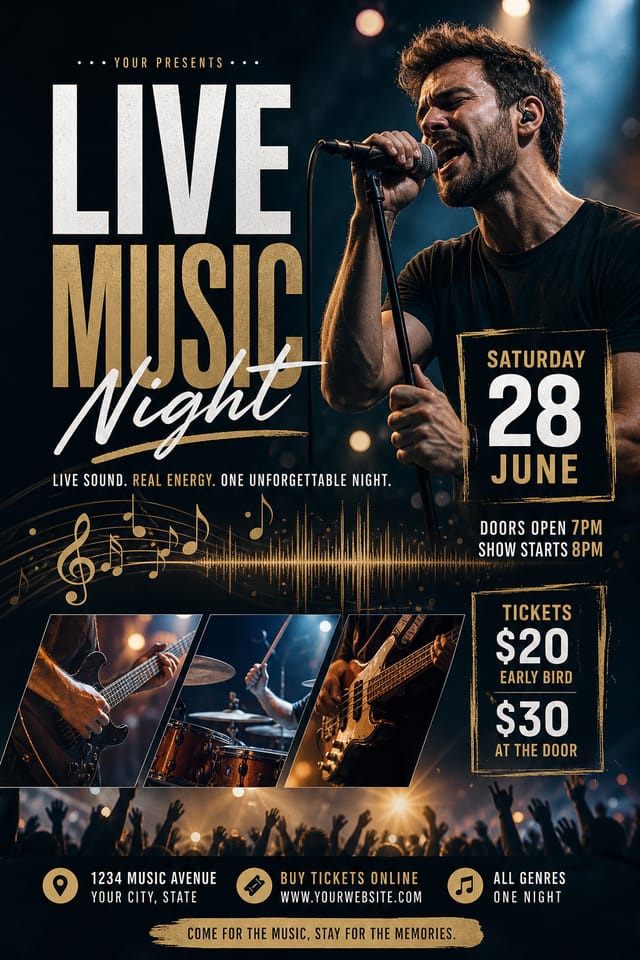
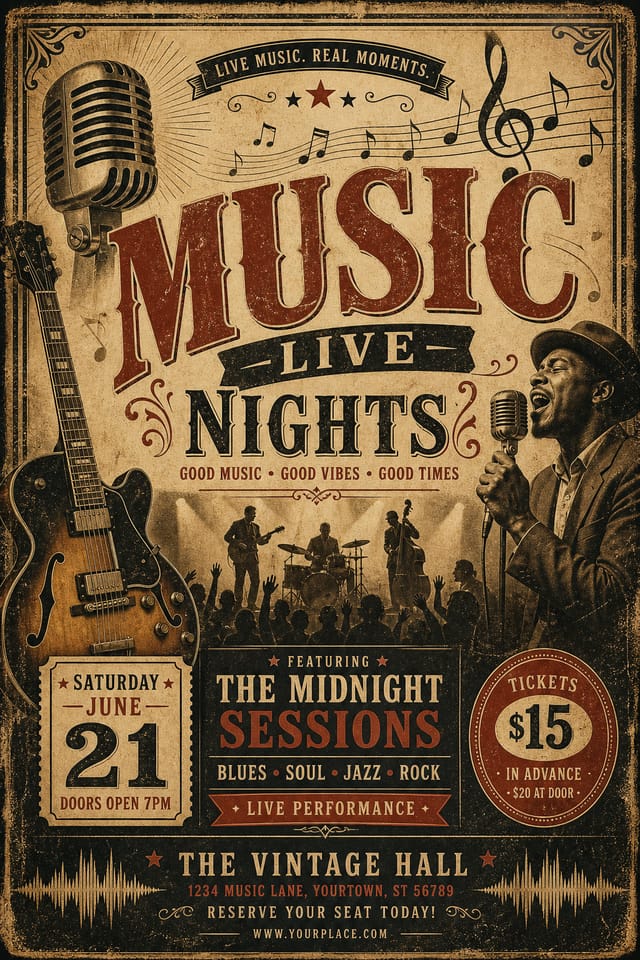
How AI Translates Music Style: Visual Processing Explained
How Pixazo Reads Music Style Cues
Professional music flyer design involves more than applying a color filter to a generic layout.
The visual language of music design encompasses distinctive compositional approaches, characteristic color affinities, and typographic choices that signal quality and intentionality.
When you use Pixazo to create a music flyer, the AI applies this visual knowledge to your specific request.
The result looks deliberate and style-appropriate, not accidental or template-derived.
How to Evaluate Music Flyers: What to Aim For
Music Flyer Creation Tools: Feature Overview
Print-Ready Output
Generated music flyers are sized and structured for professional printing. Download high-resolution files ready for production.
Style-Accurate Generation
The AI interprets music design conventions and applies them to your flyer, producing output that looks correctly styled rather than generically templated.
Instant Iterations
Generate multiple music flyer variations from a single prompt. Compare options and refine until the design matches your vision.
Commercial Use Rights
Designs generated with Pixazo are yours to use commercially. No additional licensing required for music flyer projects.
Copy-Paste Music Flyer Prompt Collection
Copy any prompt below and paste it into Pixazo to generate your design instantly.
Series-compatible music flyer design, visual language that extends to multiple formats, consistent design system across variantsMonochromatic music flyer, single-hue palette with value variation for contrast, typographic hierarchy creates visual interest without color complexityRefined music flyer, sophisticated color relationships, intentional whitespace, typefaces appropriate to music style, balanced compositionMusic flyer for digital display, optimized proportions for screen viewing, colors calibrated for RGB output, legible at typical viewing distanceMusic flyer design, clean layout, strong typography hierarchy, appropriate color palette for music aesthetic, high contrast between headline and backgroundTwo-color music flyer design, high contrast between primary and secondary color, clean separation between graphic and text zonesFrom Prompt to Music Flyer: The Simple Process
Watch: Creating Music Flyer designs step by step
Music Flyer Design Guidance: Common Pitfalls
Test with real content
Never finalize a music flyer with placeholder text. Real copy often has different lengths and line breaks that affect the design.
Keep the message focused
A strong music flyer communicates one primary idea clearly. Supporting details should reinforce, not compete with, the main message.
Use a consistent visual hierarchy
Structure your music flyer so the viewer's eye follows a clear path from headline to supporting details to call-to-action.
Skip proofreading
Typos and grammatical errors on a music flyer undermine credibility instantly. Always have someone else review the final text.
Rely solely on AI output
AI-generated music flyer designs are a starting point. Human review catches issues with context, tone, and accuracy that AI can miss.
Overcrowd the layout
Filling every pixel of your music flyer with content makes it harder to read and reduces the impact of every individual element.
Music Flyer Applications: A Practical Guide
Fan Community Materials
Create music flyers for fan clubs, viewing groups, and appreciation events. Designs that celebrate fandom and community.
Social Media Event Promotion
Design music flyers sized for Instagram, Twitter, and Facebook event pages. Platform-optimized materials that maximize reach.
Merchandise and Collectibles
Generate music flyers intended for print on merchandise, limited editions, and collectible items. Designs with commercial print production in mind.
Gig and Show Promotion
Create music flyers announcing upcoming performances, screenings, and shows. Eye-catching designs that drive ticket sales and attendance.
Music Flyer Aesthetics: Options and Variations
Classic Music
Traditional music design principles applied to modern flyer format. Clean composition, conventional hierarchy, time-tested visual decisions.
Editorial Music
Text-dominant music flyer layout inspired by print publication design. Typographic variety creates visual rhythm.
Geometric Music
Structured music composition using grid systems and angular forms. Order and precision define the visual approach.
Textured Music
Music design with added surface depth. Background treatments add visual interest without disrupting legibility.
Music Flyer AI: Key Things to Know
Include the target language in your prompt when generating music flyers with non-English text. The AI selects typographic approaches appropriate for the language and applies music design conventions to the overall layout regardless of language.
A music flyer generates in seconds after submitting your prompt. Total time from prompt submission to downloadable file is typically under a minute, including any server processing time.
Canva uses fixed templates you customize manually. Pixazo generates original music flyer designs from your description, so every output is unique. For music work specifically, the AI applies style-specific design decisions rather than offering generic drag-and-drop templates.
Your prompt history is saved in your account. You can revisit previous music flyer prompts, duplicate them with modifications, and build a library of proven prompt structures for consistent music design output.
Templates apply a fixed visual structure with placeholder content. AI generation produces original designs based on your specific description. Two music flyers generated from different prompts will have genuinely different layouts, not just different text in the same box positions.
Pixazo supports PNG, JPEG, and PDF export for music flyers. PNG preserves transparency if your design uses it. JPEG works well for web and social media. PDF is the preferred format for print production of music flyers.
Music Flyer Design Tool Landscape: Side by Side
| Tool | Description |
|---|---|
| Stencil | Lightweight image creator optimized for fast social media graphics |
| Pixazo | AI-powered music flyer generator with prompt-based design and professional output quality |
| Canva | Drag-and-drop editor with a large template library and collaboration features |
| Fotor | Photo editing platform with design templates and batch processing |
| PicMonkey | Photo editor and design tool with brand kit management |
Showcasing Music Flyers: Community Creations
Real creators sharing their music designs made with Pixazo AI.

Music flyer for outdoor billboard at 14x48 feet, extreme readability at distance, three-word headline max, high contrast background
Full-bleed background music flyer, image or texture extends to edges, foreground elements float above, headline anchored to center
Refined music aesthetic flyer, sophisticated color relationships, intentional negative space, type selection matching music conventionsMusic Flyer Generation: Capabilities and Caveats
Known limitations and trade-offs of AI-generated music design. AI music flyer generation produces strong results within its design domain. These notes describe where human judgment and manual work remain necessary.

