School Magazine Cover : Create Free School Magazine Covers in Minutes with AI
Create Custom School Magazine Covers Quickly with Pixazo Best AI School Magazine Cover Maker. Try for Free!
Get Started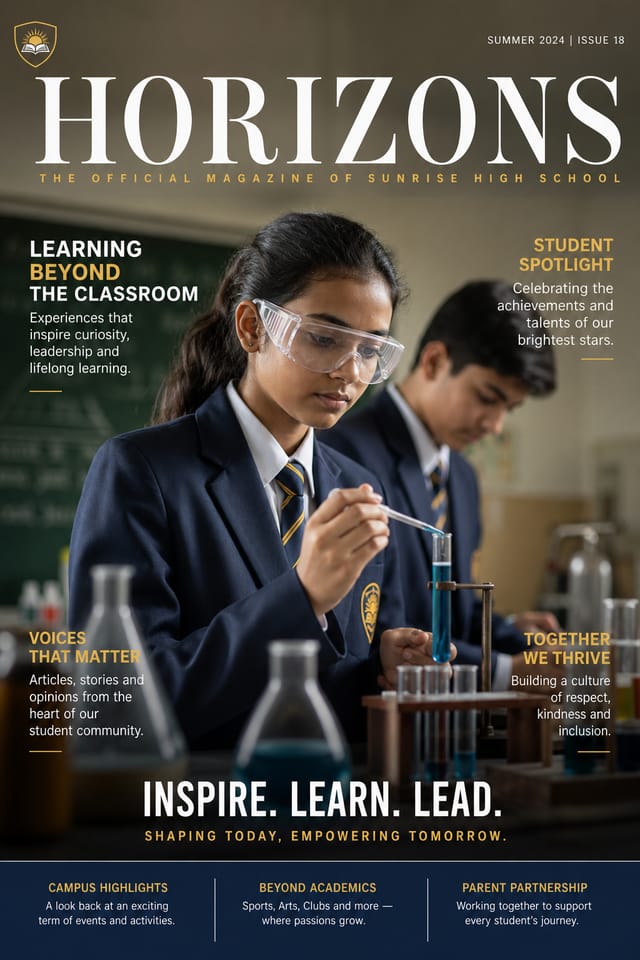
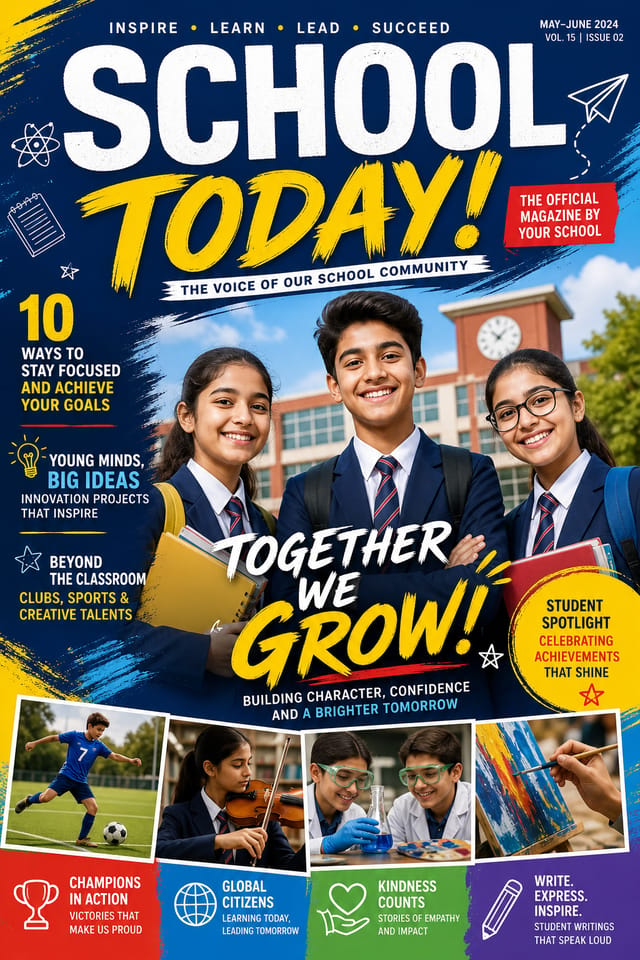
Pro Tips for School Magazine-Cover Design: Expert-Level Advice
Limit Your Color Palette
Stick to 2-3 primary colors in your school magazine-cover design. Too many colors compete for attention and weaken the visual hierarchy.
Match Tone to Audience
A school magazine-cover for a corporate event needs a different visual tone than one for a music festival. Let the audience guide your style choices.
Consider the Context
Think about where your school magazine-cover will appear. A design optimized for social media needs different proportions and density than one for a physical bulletin board.
Test at Actual Size
Always preview your school magazine-cover at the dimensions it will be displayed. Design details that look fine at 100% can disappear or crowd at real-world scale.
Get Feedback Early
Share your school magazine-cover draft with someone outside the project. Fresh eyes catch issues you have become blind to after hours of refinement.
Behind School Magazine-Cover Design: Feature Overview
Print-Ready Output
Generated school magazine-covers are sized and structured for professional printing. Download high-resolution files ready for production.
Layered Style Application
Combine school style with other design parameters in a single prompt. The AI interprets complex requests and applies multiple style constraints simultaneously.
Color Temperature Control
Specify warm, cool, or neutral color direction for your school magazine-cover. The AI builds the full palette around your temperature preference.
Prompt Refinement
Adjust your description to refine any aspect of the school magazine-cover design. The AI responds to specific direction about colors, layout, or content.
Typography Matching
Typefaces are selected to match school aesthetic expectations. The AI pairs fonts that reinforce your school magazine-cover's visual identity.
Consistency Across Variants
Generate multiple school magazine-covers for a project and maintain visual consistency across the set. Specify your core design parameters and vary secondary elements.
School Design Community: A Design Gallery
Real creators sharing their school designs made with Pixazo AI.
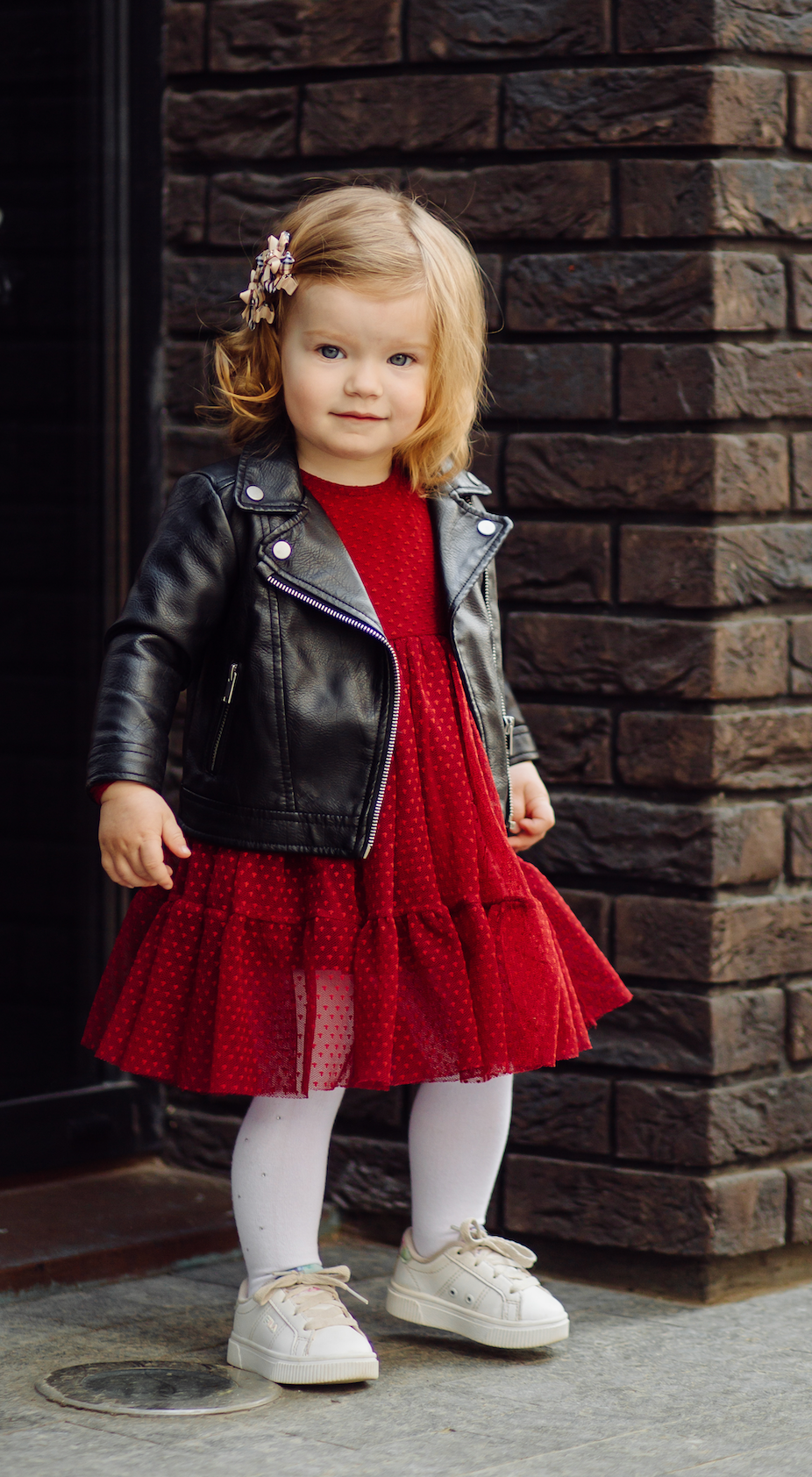
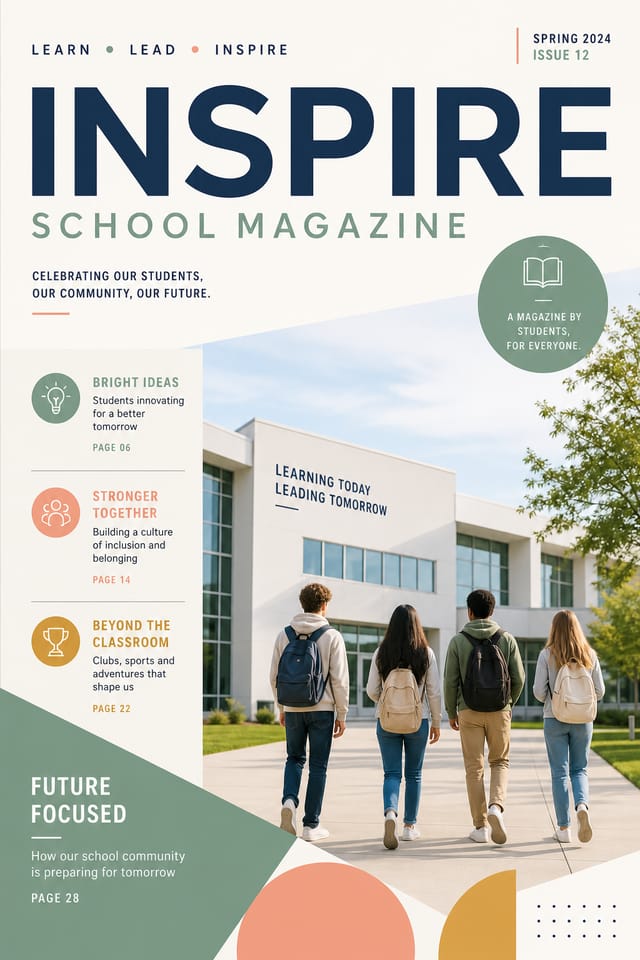
School magazine-cover design, clean typographic hierarchy, palette appropriate to school aesthetic, high contrast headline, balanced composition
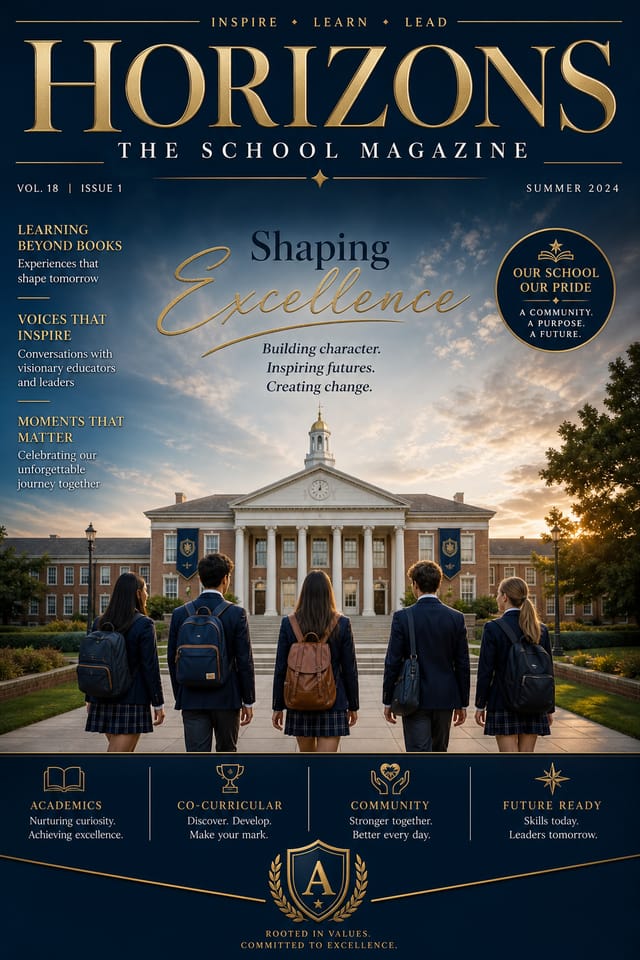
Moody school magazine-cover with deep shadows and dramatic lighting feel, dark palette, cinematic atmosphere, headline in condensed uppercase
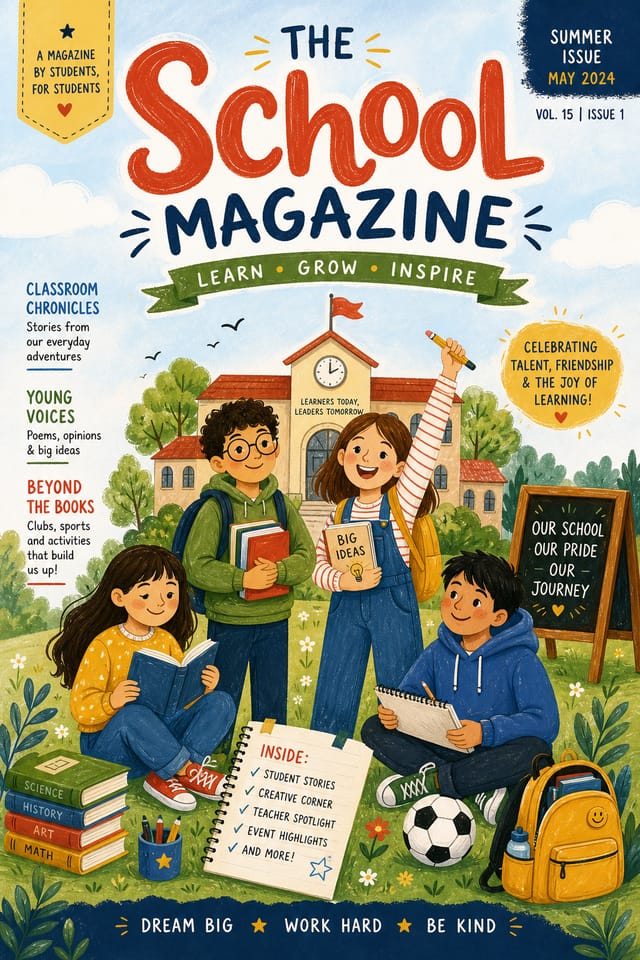
Playful school magazine-cover for a family audience, rounded typography, bright saturated colors, approachable and energetic toneWhen You Need School Magazine-Covers: Everyday and Professional
Student Recruitment Materials
Generate school magazine-covers for program open days, scholarship announcements, and enrollment campaigns. Designs that appeal to prospective students.
Grant and Funding Presentations
Create school magazine-covers to support funding applications and donor presentations. Visual summaries that make research impact tangible.
Thesis and Dissertation Defense
Design school magazine-covers for viva presentations and thesis defenses. Clear visual aids that support oral examination of research.
Conference Presentations
Create school magazine-covers for academic conferences, symposia, and research showcases. Designs that present complex findings in a scannable visual format.
Workshop and Seminar Notices
Generate school magazine-covers announcing guest lectures, skill workshops, and study groups. Practical materials for academic community notice boards.
School Magazine-Cover Design Trends: Design Movements
Data-Driven Visuals
Incorporating charts, statistics, and structured data directly into school magazine-cover layouts helps communicate complex messages at a glance.
Dark Mode Aesthetics
Dark backgrounds with high-contrast accents are increasingly common in school magazine-cover design, reducing visual fatigue and adding sophistication.
Motion-Ready Design
Static school magazine-cover designs are being created with animation in mind, using layered elements that translate smoothly to motion graphics.
Asymmetric Composition
Breaking grid symmetry in school magazine-cover layouts creates visual tension and a modern, editorial feel that stands out.
Bold Typography
Oversized type and expressive fonts are dominating school magazine-cover design, turning headlines into visual centerpieces rather than just text.
Hand-Drawn Elements
Illustrations, doodles, and hand-lettering bring a personal, approachable quality to school magazine-cover designs in an era of polished digital output.
Creating Your School Magazine-Cover: Three Easy Steps
Begin with Your Vision
Start with a text description of your school magazine-cover concept. Specify the visual style, colors, layout direction, and key text. Detailed prompts produce more accurate school magazine-cover designs than general ones.
Evaluate the Result
Pixazo generates your school magazine-cover in seconds. Review the design and adjust your prompt to refine specific elements: change the color palette, shift the layout weight, or add visual elements you want included.
Download the Result
Download your completed school magazine-cover in the format that fits your use case. High-resolution files for print, web-optimized versions for digital, or PDF for production-ready delivery.
Watch: Creating School Magazine Cover designs step by step
Results with School Magazine-Cover AI: Results Breakdown
Generate school magazine-cover designs at no cost with the f
Generate school magazine-cover designs at no cost with the free plan
Output formats available for every school magazine-cover gen
Output formats available for every school magazine-cover generation
Languages supported for text rendering in school magazine-co
Languages supported for text rendering in school magazine-cover designs
School Magazine-Cover Look and Feel: A Visual Guide
Editorial School
Text-dominant school magazine-cover layout inspired by print publication design. Typographic variety creates visual rhythm.
Contemporary School
Current school design sensibility with updated proportions, modern typefaces, and contemporary color relationships.
Textured School
School design with added surface depth. Background treatments add visual interest without disrupting legibility.
Atmospheric School
School magazine-cover design where mood takes priority. Color and composition work together to create a specific feeling.
Writing School Magazine-Cover Prompt Starters
Copy any prompt below and paste it into Pixazo to generate your design instantly.
Geometric school magazine-cover, structured grid system, angular composition, colors in blocks rather than gradients, modern clean finishClean school magazine-cover design, geometric structure, disciplined typography, color accent used selectively for emphasis, printer-optimized resolutionSchool magazine-cover with strong visual hierarchy, largest element reads clearly, supporting elements organized by importance, clean background treatmentHigh-impact school magazine-cover, immediate visual read at thumbnail size, clear headline dominance, supporting information structured logicallyEditorial-style school magazine-cover, text-dominant design, typographic treatment carries visual weight, layout proportions inspired by print publication designWhat School Magazine-Cover AI: Honest Expectations
Known limitations and trade-offs of AI-generated school design. Being specific about what AI magazine-cover generation can and cannot do helps you plan your workflow and set accurate expectations.
Getting Started with School Magazine-Covers: FAQ
The AI renders text as specified in your prompt, so double-check spelling and punctuation before generating. If text renders incorrectly in a school magazine-cover, adjust your prompt and regenerate. The AI follows your exact text input.
Common sizes include 1080x1080 for Instagram feed, 1080x1920 for stories and reels, 1200x628 for Facebook links, 1500x500 for Twitter headers, and 1080x1350 for Pinterest. Specify the platform in your prompt and Pixazo optimizes school layout for that format.
Pixazo generates high-resolution files suitable for both print and digital use. Specify your intended output format in your prompt. Print school magazine-covers benefit from high-DPI settings, while web and social media use works well with standard resolution output.
Pixazo generates original designs rather than copying existing work. The AI creates school magazine-covers from learned design principles, not by stitching together fragments of existing designs. Generated output does not reproduce copyrighted material or identifiable artistic styles of living creators.
Pixazo supports PNG, JPEG, and PDF export for school magazine-covers. PNG preserves transparency if your design uses it. JPEG works well for web and social media. PDF is the preferred format for print production of school magazine-covers.

