11 Best AI Voice Cloning Tools in 2026


How Is AI Voice Cloning Revolutionizing Audio Content Creation?
Artificial intelligence is revolutionizing the way audio content is created by enabling highly realistic speech through advanced AI voice generators and cloning tools. With the global AI voice cloning market projected to grow from $2.1 billion in 2023 to more than $25.6 billion by 2033, these technologies are rapidly becoming essential for industries such as podcasting, video narration, gaming, dubbing, and accessibility services.
By 2026, AI voice cloning is expected to significantly reduce production time, lower costs, and ensure consistent voice quality across platforms and content types. This shift makes the technology crucial for scaling creative projects, personalizing branded voiceovers, and localizing content efficiently for global audiences.
What Is AI Voice Cloning and Why Is It Becoming Essential for Content Creation?
AI voice cloning, also known as voice synthesis, is the process of replicating human-like speech using deep neural networks trained on large volumes of audio data. These models, including advanced systems like VITS and Tacotron, analyze vocal features such as tone, inflection, and emotion to generate speech that sounds like a real person or matches a specific voice style.
This technology empowers creators to produce narration, ads, and character voices without hiring voice actors, while marketers can build distinct brand voices or localize content with ease. Educators and developers rely on AI-generated voices for audiobooks, interactive learning platforms, and accessibility features like multilingual navigation. These applications have grown significantly with the rise of AI text to speech voice generators that support scalable audio production with natural-sounding output.
Beyond convenience and scalability, voice cloning’s ability to fine-tune tone and reuse high-quality voice samples has transformed the way digital content is created. However, as adoption increases, it’s equally important to address the ethical concerns in AI generated voiceovers, including consent, misuse, and authenticity, to ensure responsible use of this powerful technology.
How We Select the Best AI Design Generator Platforms at Pixazo
At Pixazo, we carefully evaluate AI design generator platforms to help users skip the overwhelming trial-and-error process. Our experts, with extensive experience in AI-powered design tools, assess each platform based on creativity, ease of use, customization options, and overall performance. We put these tools to the test by creating designs across different categories to ensure they deliver high-quality results effortlessly. Every recommendation is based on thorough research and real-world testing, with no paid placements or outside influence. Want to know how we pick the best AI design platforms? Explore our detailed evaluation process.
Disclaimer – Portions of this article were drafted with AI and reviewed by Jayesh Chaubey
What Are the Best AI Voice Cloning Tools Available Today?
The best AI voice cloning tools offer realistic voice output, ease of use, and flexible deployment for various industries. These platforms use advanced text-to-speech and voice synthesis models to deliver natural-sounding speech that adapts to different tones and languages. Whether you’re producing podcasts, explainer videos, e-learning modules, or in-game characters, the right tool can streamline voice creation significantly.
- Pixazo AI Voice Cloning – an AI-powered voice cloning tool perfect for beginners creating podcasts, videos, or training content with realistic AI speech.
- ElevenLabs – Known for ultra-realistic voice synthesis, emotional tones, and robust API access for professional-grade applications.
- Murf.AI – Ideal for marketers and educators, offering studio-quality voiceovers with simple UI and team collaboration features.
- Uberduck – A creative, community-driven platform with custom voice cloning and rap voiceovers popular among casual creators and meme culture.
- OpenVoice AI (by MyShell) – Open-source and developer-friendly, offering instant voice cloning with multilingual and multi-emotion control.
- Voicemy.ai – Free and beginner-friendly, Voicemy.ai enables quick voice cloning for YouTube, TikTok, and other content creation platforms.
- PlayHT – Offers hyper-realistic text-to-speech voices with API access, perfect for scalable voice content in commercial and enterprise use cases.
- Hailuo AI Audio (MiniMax Audio) – A Chinese voice AI model with expressive voice cloning optimized for Mandarin content and localization projects.
- Descript (Overdub) – Allows creators to clone their own voice and edit audio like text, ideal for podcasting, interviews, and training videos.
- Audiobox by Meta (FAIR) – A research-backed tool using generative AI to synthesize speech, sound effects, and voice styles from simple prompts.
- Respeecher – Trusted by film and TV studios, Respeecher offers high-fidelity voice cloning for professional dubbing and historical voice recreation.
1. ElevenLabs
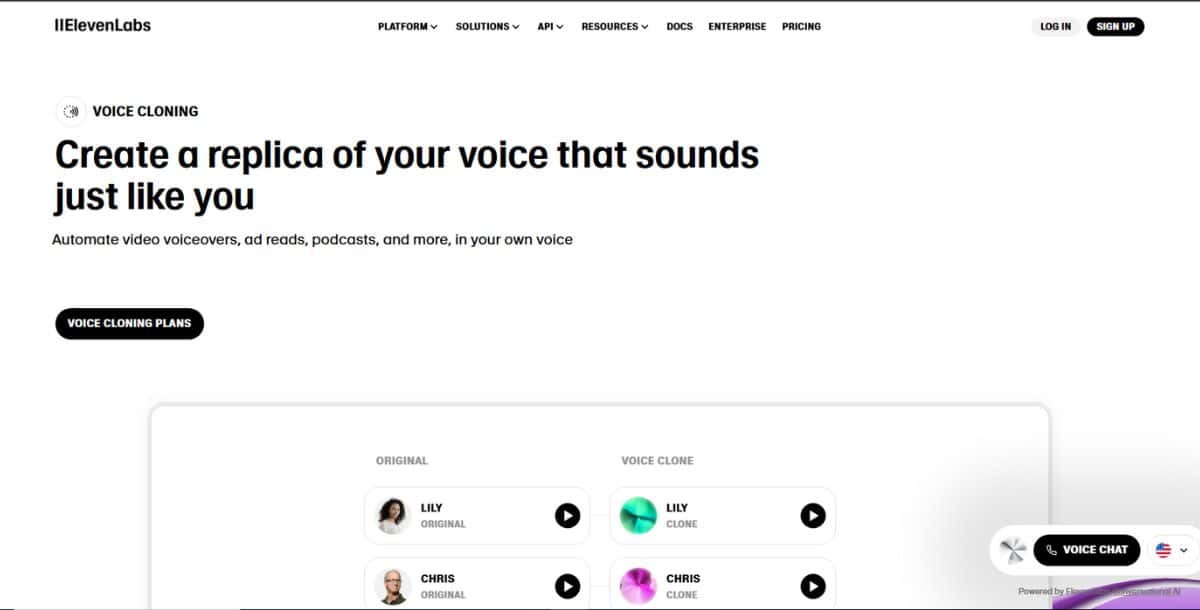
A leading AI voice generator delivering ultra-realistic text-to-speech and voice cloning with 120+ voices in 32 languages. Powered by deep learning for natural cadence, it requires ~30-minute audio samples for high-quality clones and offers a reliable API for app integration.
Best for: Content creators and professionals needing lifelike voices for podcasts, videos, audiobooks, and games. Developers leverage its robust API for custom apps, while advanced users enjoy granular tone control, though beginners may find options complex.
Key Features:
- Voice cloning from 30-minute samples.
- Multilingual support across 32 languages.
- Fine-tune tone, pacing, and emotion.
- 120+ professional voices in library.
- Developer-friendly REST API for seamless integration.
- High-quality, near-human voice output.
Pros: Highly natural voices, extensive language support, flexible API integration, robust editing and collaboration tools.
Cons: Limited free plan (10k characters), paid tiers costly for professional use, complex for beginners, occasional pacing artifacts in long passages.
2. Murf.AI
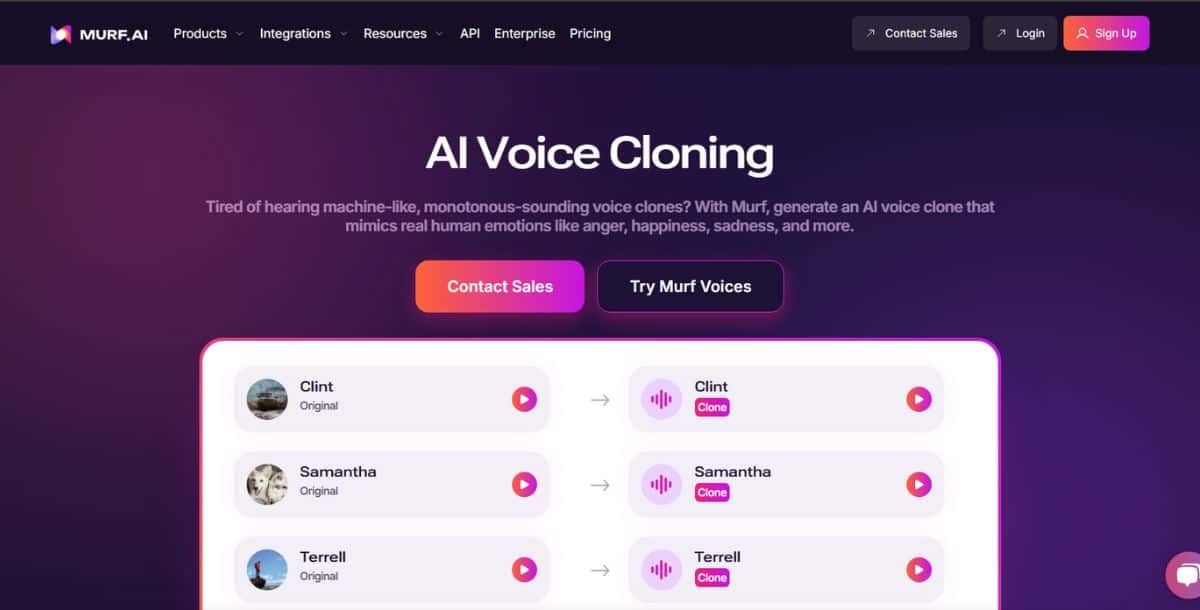
A versatile platform with 200+ realistic voices, offering customization, background noise removal, and AI translation. Integrates with tools like Canva and WordPress, designed for professional-quality voiceovers with an easy interface.
Best for: Businesses, e-learning creators, and marketing teams needing polished voiceovers for tutorials, webinars, and commercials. Suits collaborative teams with multi-user accounts and enterprise features.
Key Features:
- Wide voice library with varied tones and accents.
- Adjust pitch, speed, emphasis, and pauses.
- One-click noise removal and voice changer effects.
- AI voice cloning and translation for multilingual content.
- Team collaboration tools and integrations with Adobe Captivate, PowerPoint.
Pros: Intuitive interface, extensive customization, large voice library, fast generation, enterprise-ready with security and support.
Cons: Limited free tier, costly for heavy use, slight learning curve, requires longer audio samples for cloning.
3. PlayHT
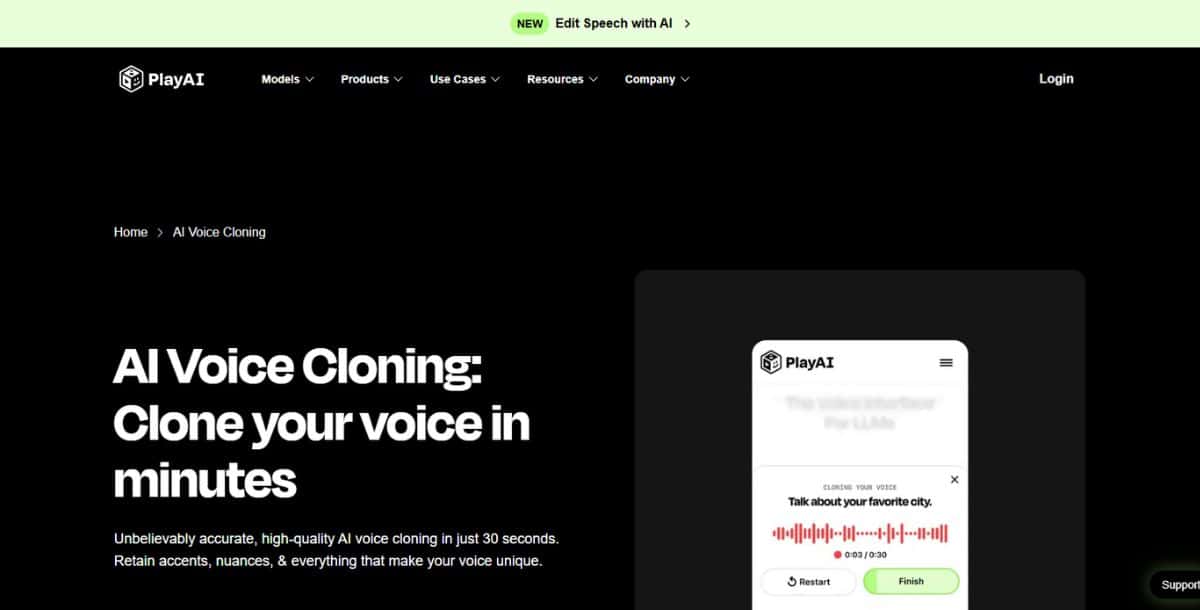
Best for: Teams and enterprises needing rich voice resources for content agencies, podcasts, or software. Free plan suits small creators, but shines at scale.
Key Features:
- Extensive voice library and customization.
- Clone voices with hours of audio.
- Integrations with WordPress and multimedia tools.
- API and enterprise-grade security.
Pros: High-quality output, vast selection, intuitive studio, active support.
Cons: Inconsistent non-English voices, costly for individuals, complex interface, long cloning samples needed.
4. Descript (Overdub)
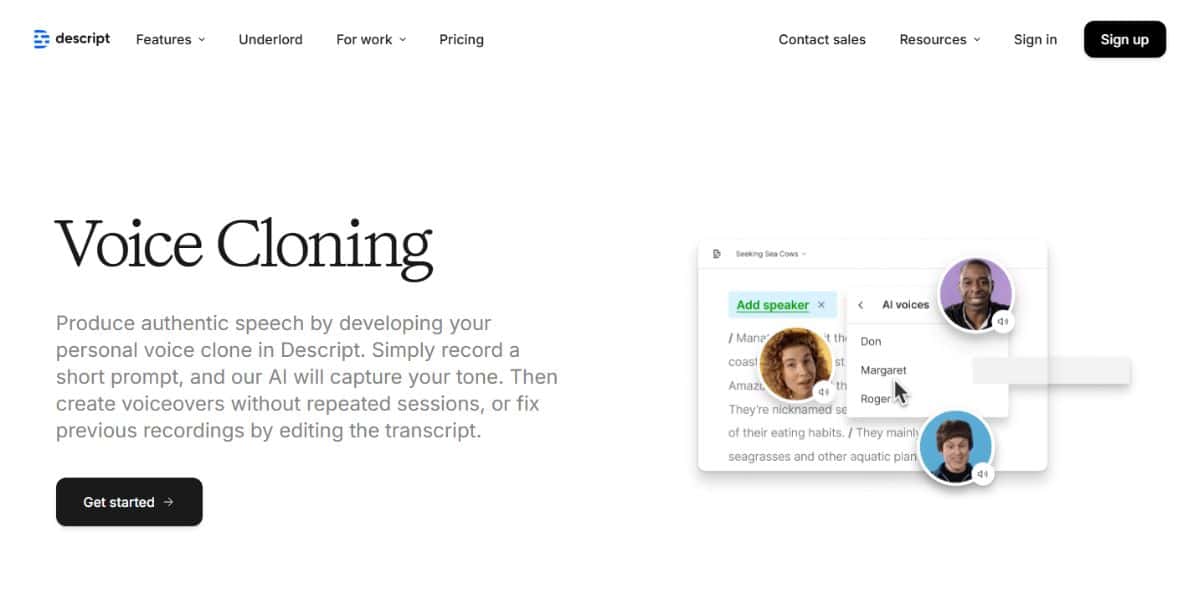
An all-in-one audio/video editing suite with Overdub, a free voice cloning feature. Edit audio via text and use clones to fix or add dialogue seamlessly.
Best for: Podcasters, YouTubers, and teams needing integrated editing and cloning for audio/video content. Ideal for transcript-based workflows.
Key Features:
- Clone voices with short samples.
- Text-based audio editing.
- Multi-voice projects and studio sound enhancements.
Pros: Seamless workflow, easy setup, team collaboration, versatile editing.
Cons: Limited vocabulary in free tier, less cloning customization, platform-dependent clones.
5. Respeecher
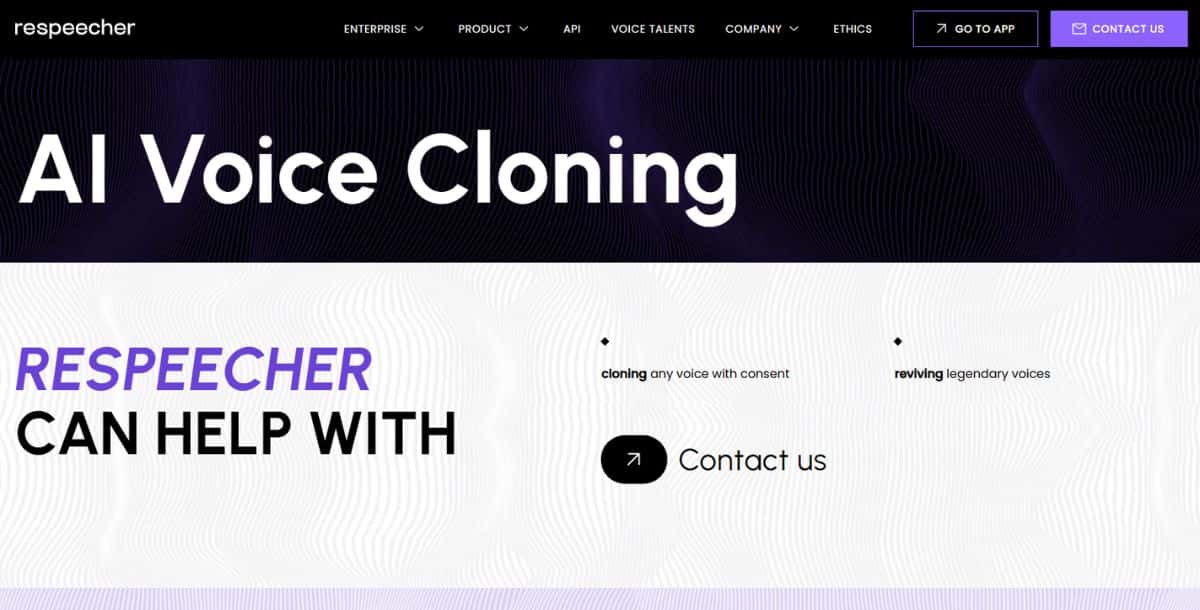
Overview: A professional platform for speech-to-speech and text-to-speech cloning, trusted by Hollywood and gaming. Offers cinematic-quality voices with ethical compliance.
Best for: High-end film, TV, and game projects needing authentic voice clones for dubbing, ADR, or historical content. Requires budget for top-tier results.
Key Features:
- Speech-to-speech cloning with emotional nuance.
- Text-to-speech with cloned voices.
- Multi-language support and voice marketplace.
Pros: Ultra-high quality, industry-proven, secure, versatile for creative workflows.
Cons: Expensive, long setup, not self-service, overkill for simple tasks.
What are the Best AI Voice Cloning Tool Comparison?
The best AI voice cloning tools stand out for their realism, versatility, and ease of use across creative and commercial projects. These platforms vary in terms of features such as language support, emotion control, real-time editing, and data input requirements. Some tools excel in high-fidelity voice replication for media production, while others prioritize accessibility and multilingual capabilities for global outreach.
| Tool | Best For | Key Features | Languages Supported | Free Tier | API Support | Sample Needed |
|---|---|---|---|---|---|---|
| ElevenLabs | Creators, developers, professionals | Ultra-realistic cloning, tone control, 120+ voices | 32 | Limited (10k chars) | Yes | ~30 minutes |
| Murf.AI | Businesses, e-learning, teams | 200+ voices, noise removal, AI translation | Multiple | Limited | Yes | Several minutes |
| PlayHT | Enterprises, teams | 800+ voices, customization, enterprise tools | 142 | Limited | Yes | Hours |
| Descript | Podcasters, YouTubers | Overdub cloning, text-based editing, multi-voice | Multiple | Yes (1k words) | Limited | Short sample |
| Respeecher | Film, game professionals | Speech-to-speech, emotional nuance, voice marketplace | Multiple | No | Limited | Long samples |
| Pixazo AI Voice Cloning | Beginners, marketers, small teams | Instant cloning, no-code integration, Coqui XTTS | Multiple | Yes | Yes | Few seconds |
| Uberduck | Hobbyists, indie creators | 4,000+ voices, singing, instant cloning | 70+ | Yes | Yes | Few seconds |
| OpenVoice | Developers, researchers | Cross-lingual cloning, open-source, tone control | Multiple | Yes | Limited | Few seconds |
| Voicemy.ai | Hobbyists, musicians | Voice cloning, AI melody, community library | Multiple | Yes | No | Few seconds |
| Hailuo AI | Creators, small teams | Fast cloning, emotion control, multilingual | 12 | Yes | No | 10–60 seconds |
| Audiobox | Researchers, developers | Text-to-audio, high-fidelity cloning, soundscapes | Multiple | No | No | Varies |
Suggested Read: AI Generated Media 2026: The Definitive Year-End Review
How Can You Choose the Best AI Voice Cloning Tool for Your Needs?
Choosing the best AI voice cloning tool depends entirely on your use case, technical skill level, and budget. Each category of user—beginner, creator, developer, or professional—will prioritize different factors such as ease of use, audio quality, or integration capabilities.
- Beginners and Casual Users: Platforms like Pixazo, Uberduck, Voicemy.ai, or Descript’s free plan are ideal for quick, low-cost cloning. These tools are intuitive and don’t require technical expertise, making them perfect for short personal projects or experimentation.
- Content Creators and Marketers: Murf.AI, PlayHT, and Descript strike a good balance between quality and usability. These tools are popular for generating voiceovers for podcasts, training modules, and videos, especially when consistent tone and emotional expression are key.
- Developers and Tech-Savvy Users: ElevenLabs and OpenVoice offer powerful APIs and customization options suitable for app integration, research, and automation. Developers often prefer tools that are part of larger ecosystems or include advanced text-to-speech (TTS) APIs that support high scalability.
- Professionals in Film or Gaming: Respeecher and ElevenLabs Pro are built for high-end production. These tools deliver cinematic-grade voice quality with control over tone, pitch, and emotion, which is essential for immersive experiences. Always compare based on output quality, ease of use, pricing, and features like voice variety, emotion layers, or platform integrations. Testing free trials is highly recommended to determine which solution fits best within your workflow.
Conclusion: What’s the Final Take on Choosing the Right AI Voice Cloning Tool?
In 2026, AI voice cloning tools offer tailored solutions for everyone—from casual users to enterprise-level professionals. Tools like ElevenLabs, Murf.AI, Uberduck, Descript, PlayHT, Hailuo, OpenVoice, Voicemy.ai, Pixazo, and Respeecher each bring different strengths, such as high voice realism, simple interfaces, or powerful customization. Whether your focus is on creative storytelling, branding, education, or accessibility, exploring free trials is the best way to find a tool that aligns with your goals and technical comfort level.
What Do People Commonly Ask About AI Voice Cloning Tools?
6. Pixazo AI Voice Cloning
Pixazo’s AI Voice Cloner is part of the Pixazo suite. It lets you “clone your own voice or any other voice in minutes” using just a short audio sample. The process is user-friendly: record or upload a few seconds of audio, and the tool instantly produces a synthetic model that can speak arbitrary text. Pixazo also integrates the voice cloner with its other AI features (like a design builder and Text to Speech APIs), making it convenient to use the cloned voice alongside AI-generated images or text.
Best for: Beginners and non-technical users such as marketers, teachers, or entrepreneurs who need a fast, easy way to produce AI speech. Its simplicity and free trial make it accessible to those just starting with voice cloning. Small teams or content creators who already use Pixazo’s AI design tools may find it especially convenient.
Key Features:
- Instant cloning with a 3–5 second voice sample.
- Multi-language support for text input.
- Integration with Pixazo’s platform using AI APIs.
- Adjustable pitch, speed and volume for the cloned voice.
- Free Trials for 7 Days.
Suggested Read: Best AI Voiceover Tools for Video Creators in 2026
Pros:
- Very easy to use: No technical setup. The web interface guides you through recording and cloning.
- Quick turnaround: Clone takes seconds with a tiny sample.
- Free to try: A free tier lets you experiment with voices and languages.
- Part of a suite: Works smoothly with Pixazo’s other AI design tools.
Cons:
- Voice quality: Clones may sound slightly less natural than top-tier engines. Some users note minor robotic artifacts.
- Limited control: Advanced users may find customization (tone, emotions) more basic than specialized tools.
- Dependency on the internet: Being a cloud service, it requires a connection and runs on Pixazo’s servers.
- Integration lock-in: Best value if you already use Pixazo’s ecosystem; standalone use is limited.
7. Uberduck
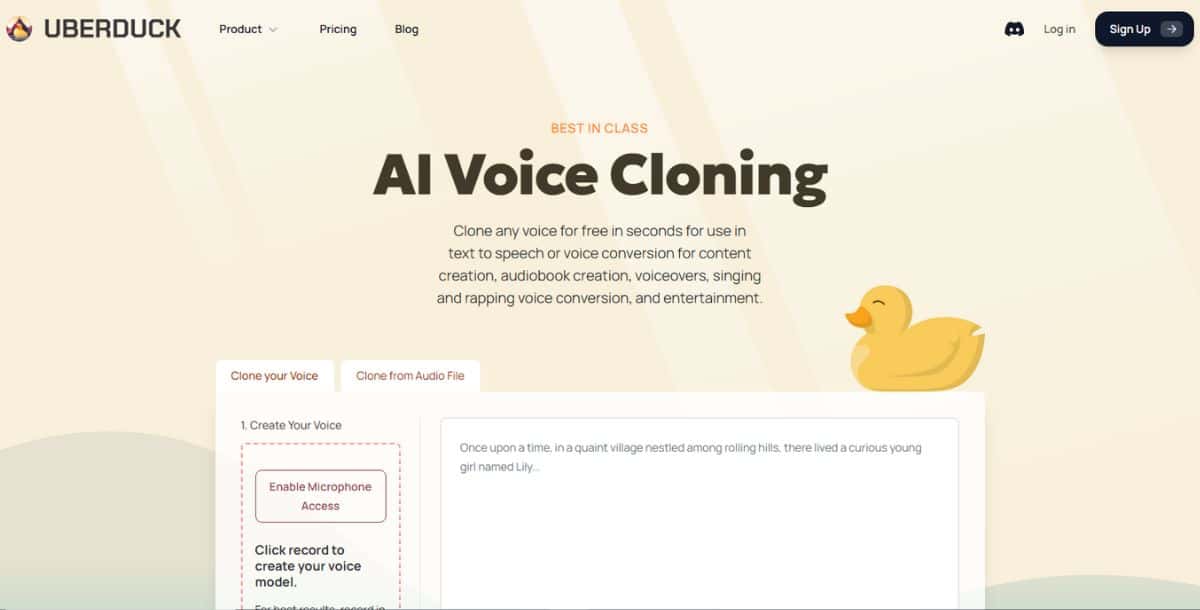
A creative platform offering free, instant voice cloning and text-to-speech with a 4,000+ voice library, including celebrities and cartoons. Supports singing and rapping, with a mobile app and API for developers.
Best for: Hobbyists, indie creators, and meme-makers creating fun content for TikTok, social media, or indie games. Not suited for polished professional narration.
Key Features:
- Instant cloning from short samples.
- Vast voice library in 70+ languages.
- Voice conversion for singing or rapping.
- Fast text-to-speech and community-contributed voices.
Pros: Free with diverse voices, high accuracy (>95%), quick results, innovative for creative projects.
Cons: Variable voice quality, limited fine-tuning, less reliable under heavy load, potential IP issues with celebrity voices.
Suggested Read: Best AI Animation Video Generators in 2026
8. OpenVoice AI (by MyShell)
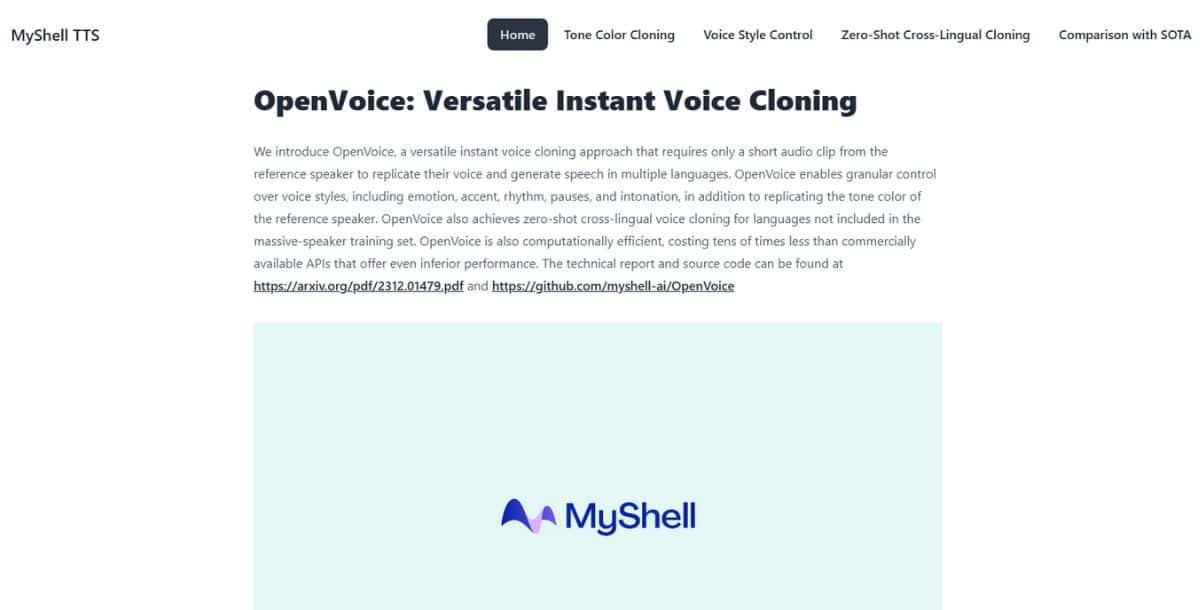
An open-source model by MIT and MyShell, offering free, high-quality voice cloning with cross-lingual capabilities. Supports languages like English and Chinese, available via web demo or local installation.
Best for: Developers and researchers needing free, customizable solutions for multilingual or experimental applications. Requires technical know-how.
Key Features:
- Zero-shot cross-lingual cloning.
- Accurate tone replication and style control.
- MIT-licensed for commercial use, efficient processing.
Pros: Free, advanced features, high-quality output, fully customizable.
Cons: Technical setup required, inconsistent demo quality, limited support, evolving stability.
9. Voicemy.ai
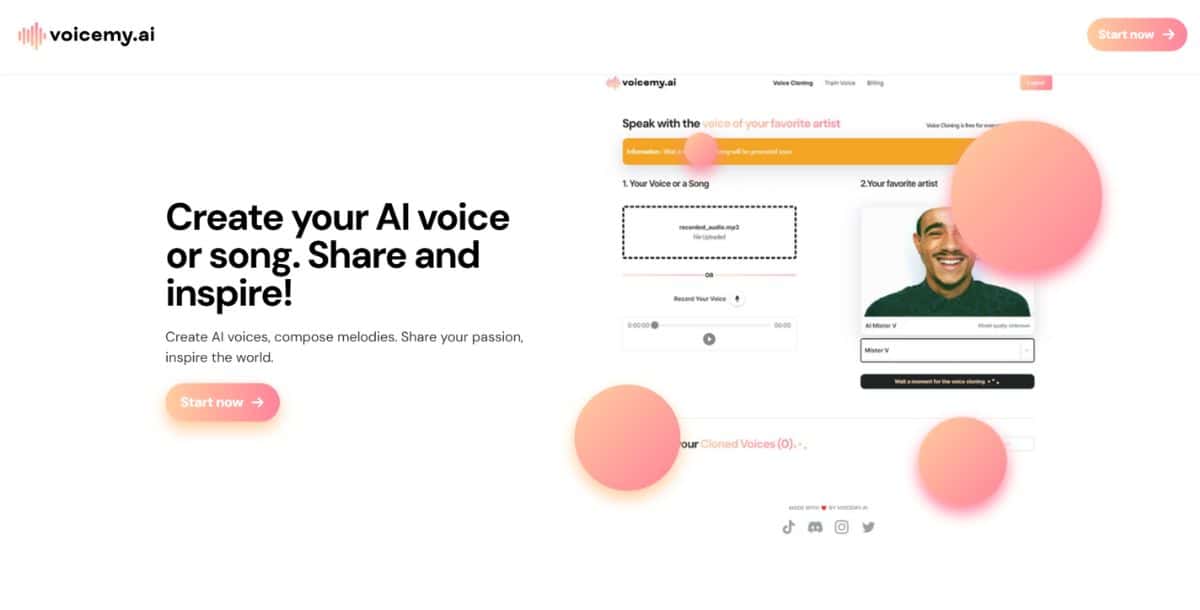
A playful web and mobile app for voice and music creation, allowing cloning from short clips or a library of famous voices. Supports AI melody composition, ideal for social content.
Best for: Hobbyists, musicians, and social creators making fun voiceovers or singing remixes for TikTok or streaming. Less suited for professional use.
Key Features:
- Clone voices or train custom models.
- AI song/melody generation.
- Community library and mobile app support.
Pros: Free, simple workflow, fun for creative content, social sharing features.
Cons: Cartoonish audio quality, limited professional controls, in-app ads, restricted commercial use.
10. Hailuo AI Audio (MiniMax Audio)
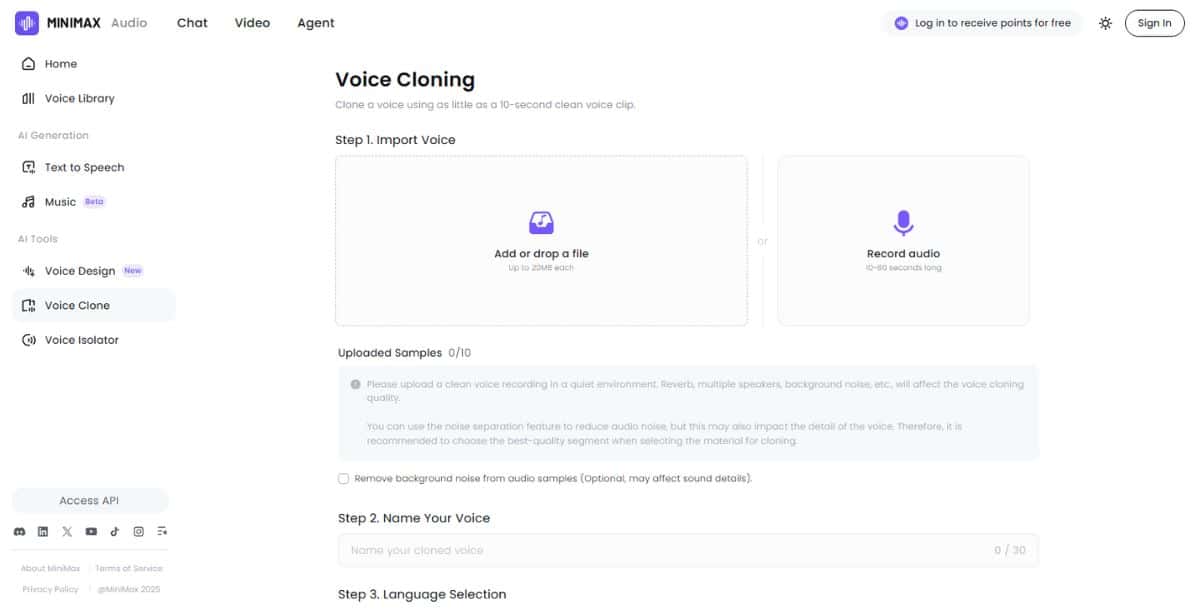
A fast-growing Chinese platform offering free, lifelike voice cloning from 10–60-second clips. Supports 12 languages with emotional control, excelling in Mandarin and Cantonese.
Best for: Individual creators and small teams needing quick, free clones, especially in Chinese-speaking markets. Limited API for commercial use.
Key Features:
- Ultra-short cloning time.
- Multilingual support with emotion controls.
- Free access via web and mobile.
Suggested Read: 10 Best AI Music Video Generator Tools in 2026
Pros: Fast, high-quality, free, expressive clones.
Cons: New outside China, limited Western language options, minimal documentation, no commercial guarantee.
11. Audiobox by Meta (FAIR)
A research platform for text-to-audio generation, including voice cloning and ambient sounds. Offers high-fidelity, customizable audio but is not yet commercially available.
Best for: Researchers and developers experimenting with cutting-edge audio AI for VR, accessibility, or new media. Not for general content creators.
Key Features:
- Natural-language audio generation.
- High-fidelity voice cloning.
- Unbound style and context customization.
Pros: State-of-the-art quality, versatile for voice and sound, research-grade capabilities.
Cons: Not publicly available, computationally intensive, unclear future terms.
What is an AI voice cloning tool?
An AI voice cloning tool replicates a person’s voice using artificial intelligence and machine learning models. By analyzing recorded voice samples, it generates synthetic speech that closely mimics the original speaker in tone, style, and inflection.
Suggested Read: Hume AI vs ElevenLabs: Comparing Two Expressive Text-to-Speech Models
Are AI voice cloning tools legal to use?
Yes, AI voice cloning tools are legal when used with proper consent from the original voice owner. Using someone’s voice without permission can raise serious legal and ethical concerns.
What are the best use cases for AI voice cloning?
AI voice cloning is ideal for podcasting, audiobook narration, content localization, branding, and multimedia production. It allows creators and businesses to generate consistent, cost-effective voiceovers at scale.
How accurate are AI voice cloning tools?
AI voice cloning tools can be highly accurate, especially with access to high-quality training data. Advanced tools reproduce emotional tone, natural pacing, and regional accents, delivering voice outputs that are nearly indistinguishable from human speech.
Which is the best free AI voice cloning tool available?
Pixazo’s AI Voice Cloning tool is one of the best free options for users seeking high-quality results without complexity. It offers a simple, no-code interface suitable for podcasts, training content, and promotional videos.
Suggested Read: Best Voice Cloning API Providers in 2026: Ranked and Compared
Frequently Asked Questions
What is AI voice cloning?
AI voice cloning creates a synthetic copy of a specific voice from audio samples, allowing you to generate new speech that sounds like that person. It is used for narration, dubbing, accessibility, and content creation.
Is AI voice cloning legal?
Cloning your own voice or one you have clear permission to use is generally acceptable, but cloning someone else’s voice without consent can violate laws and platform rules. Always get explicit permission and follow each tool’s usage policies.
How much audio do I need to clone a voice?
Some modern tools can produce a basic clone from a short sample of a few seconds, while high-fidelity results usually need several minutes of clean audio. More varied, high-quality recordings typically improve accuracy and naturalness.
Are AI voice cloning tools free?
Many offer free tiers with limited characters, voices, or watermarks, while professional features and commercial use generally require a subscription. Compare limits and licensing before committing to a tool.
Can I use cloned voices commercially?
Only if you have the rights to the voice and the tool’s license permits commercial use, so check both carefully. Ethical use, disclosure where appropriate, and consent are essential to avoid legal and reputational risk.
Deepak Joshi
Author · Pixazo
Deepak writes about generative AI models, APIs, and the workflows teams use to ship them. Reviewed by Abhinav Girdhar.