Best AI Image Generation Models in 2026: A Comparison Guide


Ask ten people for the “best” AI image model and you will get ten answers. So we stopped asking people. This guide is rebuilt on a single, reproducible benchmark: every leading text-to-image and image-editing model generated pictures for the same prompts, and those outputs were scored head-to-head by a panel of automated vision-language judges. The result is an Elo ranking — the same rating math used in chess — that tells you, with numbers instead of vibes, which models actually win most often. If you want to try it, use Flux.
The data below is a snapshot of Pixazo’s AI Image Generation Leaderboard, which is re-run whenever a major model launches. Two tracks are live: text-to-image and image editing (image-to-image). Here is what the field looks like right now.
How the ranking is measured
15 text-to-image models generate images for the same 10 prompt groups. Outputs are compared across 1,050 head-to-head matches, each scored by an ensemble of six vision-language judges (PickScore, HPSv2, ImageReward, VQAScore, a VLM judge and CLIPScore). Models are ordered by mean per-group Elo and cross-checked with a Bradley–Terry estimate. This is a transparent proxy for image quality — not human preference — so read it alongside human-vote arenas rather than as a final verdict.
Text-to-image: the 2026 Elo ranking
The top of the board is a tight pack, not a runaway. Fewer than 15 Elo points separate first from sixth — the chart makes the compression obvious, and the table has the exact figures.
Arena Elo by model
GPT Image 2 (medium) leads at 1324, with OpenAI’s GPT Image 1.5 a single point behind — statistically a tie inside the confidence intervals. Microsoft’s MAI-Image 2.5, Google’s Nano Banana 2 and ByteDance’s Seedream 4.5 fill out the elite cluster. The standout further down is NVIDIA Cosmos 3 Super at #7 — the strongest open-weight model on the board, ahead of closed rivals like Recraft v4.1 Pro and both FLUX.2 tiers.
Suggested Read: Best Free & Open-Source AI Image Generators to Self-Host in 2026
See it: the same brief, across the field
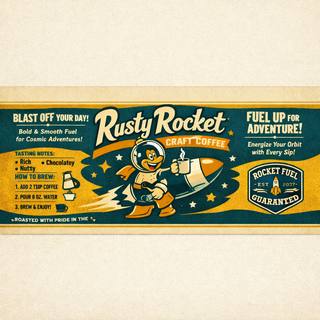
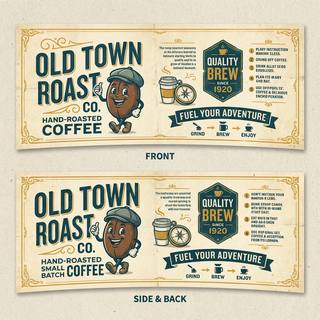
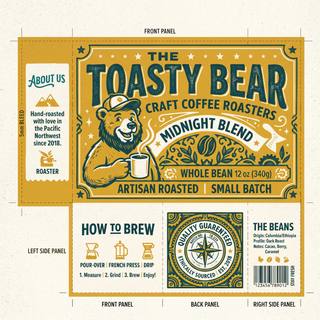
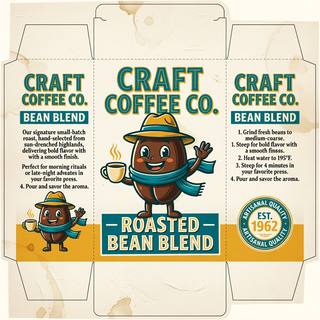
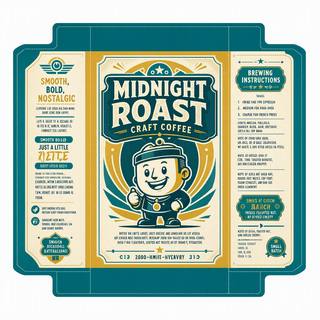
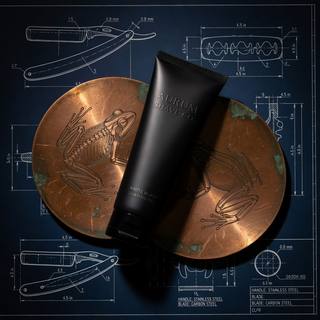
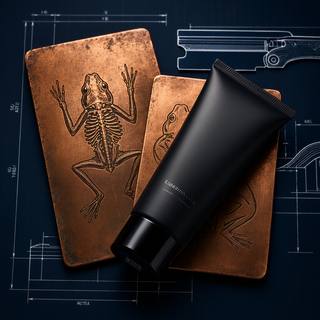
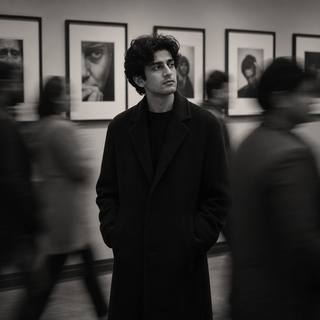
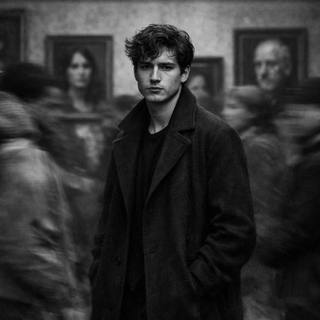
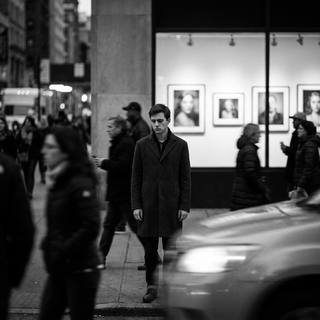
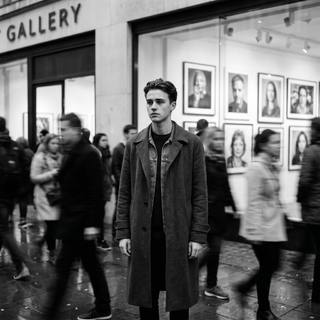
Numbers are only half the story. Below are sample outputs from the benchmark arena — the same prompt group rendered by the models in the pool. Quality differences that Elo compresses into a few points are often obvious at a glance.





Suggested Read: How AI Image Generation Models Are Ranked: Inside the Pixazo Leaderboard
Image editing (image-to-image): a different order
Editing is a separate skill from generating from scratch, and the ranking reshuffles to prove it. The same 1,050-match methodology was applied to an image-editing track of 10 models.
Arena Elo by model — editing






Suggested Read: Best AI 3D Model Generators in 2026: A Comparison Guide
What the two boards tell you
The clearest signal is how far models travel between the two tracks. This chart connects each model’s text-to-image rank (left) to its editing rank (right) — lines that rise mean the model is better at editing than at generating from scratch.
- There is no single “best” model. The generation leaders are separated by rounding error — pick on the prompt type you run most, not the #1 badge.
- Editing ≠ generation. Models that only place mid-table for text-to-image — the Nano Banana family, Grok Imagine — climb sharply when the task is editing an existing image. If your workflow is edit-heavy, rank by the editing board.
- Open weights are closing in. Cosmos 3 Super, Krea 2 and Ideogram 4 keep open models within striking distance for text-to-image; Hunyuan and HiDream do the same for editing.
Suggested Read: Best Image To Image APIs in 2026
Which model should you pick?
- Best all-round quality: GPT Image 2 or GPT Image 1.5 — they top both boards.
- Photoreal product & commercial shots: MAI-Image 2.5 and Seedream 4.5 trade wins at the top of generation.
- Editing an existing image: GPT Image 2, then the Nano Banana family — the editing board rewards them.
- Open-weight / self-host: NVIDIA Cosmos 3 Super for generation, HunyuanImage 3.0 for editing.
Try these models on Pixazo
Every model in both rankings is available through a single Pixazo API and playground — so you can benchmark them on your prompts instead of taking any leaderboard’s word for it.
Generate with these models on Pixazo
You can also explore the full, filterable AI Image Generation Leaderboard — sort by win rate, filter open vs. closed source, and switch between the text-to-image and editing tracks.
Suggested Read: Best Text To Image APIs in 2026
Frequently asked questions
Which AI image generation model is best in 2026?
In Pixazo’s benchmark, GPT Image 2 (medium) by OpenAI leads text-to-image with a mean Elo of 1324 across 10 prompt groups and 1,050 pairwise matches. GPT Image 1.5 and Microsoft’s MAI-Image 2.5 follow within a few points, so the top of the board is a tight pack rather than one clear winner.
Suggested Read: Introducing Seedream 5.0 Pro API and Seedream 5.0 Lite API on Pixazo API
Is the best generation model also the best for editing?
Not necessarily. The image-editing board is ranked separately. GPT Image 2 leads both, but Google’s Nano Banana and Grok Imagine climb well above their text-to-image positions when the task is editing an existing image.
Are open-source AI image models competitive?
They are closing the gap. NVIDIA Cosmos 3 Super is the strongest open-weight text-to-image model here at #7, ahead of several closed models, while HunyuanImage 3.0 and HiDream-o1 represent open options on the editing board.
Suggested Read: Best AI Art Generators in 2026: Top Tools Ranked and Reviewed
How is this ranking calculated?
Every model generates images for the same prompts. Outputs are compared head-to-head across 1,050 matches, each scored by an ensemble of six vision-language judges, then ordered by mean per-group Elo and cross-checked with a Bradley–Terry estimate. Scores come from automated judges, not human raters.
Can I use these models commercially?
Commercial terms are set by each model’s provider, not by the ranking. Check the license for the specific model you choose — the tables above flag which are open-weight and which are closed.
Rankings and charts sourced from Pixazo’s AI Image Generation Leaderboard (automated vision-language scoring, not human preference). Benchmark designed and reviewed by Deepak Joshi, AI Research, Pixazo. Last updated June 2026.
Suggested Read: How AI 3D Model Generation Models Are Ranked: Inside the Pixazo Leaderboard
Deepak Joshi
Author · Pixazo
Deepak writes about generative AI models, APIs, and the workflows teams use to ship them. Reviewed by Abhinav Girdhar.