Best AI Virtual Try-On Rooms in 2026



Shopping for clothes online has always been convenient, but it often comes with one big problem, not knowing how the clothes will actually look or fit. That’s where AI virtual dressing room tools are changing the game in 2026.
Save time and reduce costs by using the best AI mockup maker tools to generate realistic packaging, apparel, and device previews from simple uploads or prompts.
Here is a guide on how an AI hairstyle changer is transforming the way people explore new looks you can read about.
These tools use advanced technologies like artificial intelligence, augmented reality, and 3D modeling to let users try on clothes virtually. With just a smartphone or webcam, shoppers can see how an outfit fits their body type, explore different styles, and make confident buying decisions without visiting a store.
In this blog, we’ll explore the best AI virtual dressing room tools in 2026. Whether you’re a fashion retailer or an online shopper, these tools are making the digital fitting experience faster, smarter, and more personal. Let’s take a closer look at the top platforms leading the way this year.
What is an AI Virtual Dressing Room?
An AI virtual dressing room is a digital tool that lets users try on clothes using their phone or computer. It combines artificial intelligence, augmented reality, and computer vision to create a realistic fitting experience.
These tools scan the user’s body, analyze clothing dimensions, and show how items will look in real time. Some platforms even create 3D avatars based on a user’s photo or body measurements to improve accuracy.
AI virtual dressing rooms help shoppers find the right fit, reduce returns, and enjoy a more interactive online shopping experience. For retailers, they improve customer satisfaction and boost sales by offering a smarter way to shop.
Let’s look at the key factors we used to choose the best tools.
The rise of AI in fashion is reshaping even the most traditional attire, and the
Google Gemini Nano Banana AI saree trend
illustrates how technology can reinvent cultural garments with bold, futuristic patterns that quickly capture online attention.
Criteria for Selection of Best Virtual Try On Tools
To find the best AI virtual dressing room tools in 2026, we looked at features that truly matter to both users and retailers. Here are the key factors we considered:
- Accuracy of Fit: Tools that offer realistic try-ons based on body shape, size, and movement.
- User Experience: Easy-to-use interfaces with smooth performance on web and mobile devices.
- Integration: Compatibility with e-commerce platforms like Shopify, Magento, and custom stores.
- Customization: Support for personalized avatars, body types, and styling preferences.
- Technology Innovation: Use of AI, AR, and AI 3D models for more immersive and reliable results.
- Retailer Adoption: Popularity among fashion brands, positive feedback, and proven results.
Each tool listed in this blog was selected based on how well it meets these standards in 2026. Now let’s explore the top platforms transforming the virtual fitting room experience.
How We Select the Best AI Design Generator Platforms at Pixazo
At Pixazo, we carefully evaluate AI design generator platforms to help users skip the overwhelming trial-and-error process. Our experts, with extensive experience in AI-powered design tools, assess each platform based on creativity, ease of use, customization options, and overall performance. We put these tools to the test by creating designs across different categories to ensure they deliver high-quality results effortlessly. Every recommendation is based on thorough research and real-world testing, with no paid placements or outside influence. Want to know how we pick the best AI design platforms? Explore our detailed evaluation process.
Suggested Read: Virtual Try-On Technology in Fashion E-Commerce?
Top AI Virtual Dressing Room Tools in 2026
1. Vue.ai
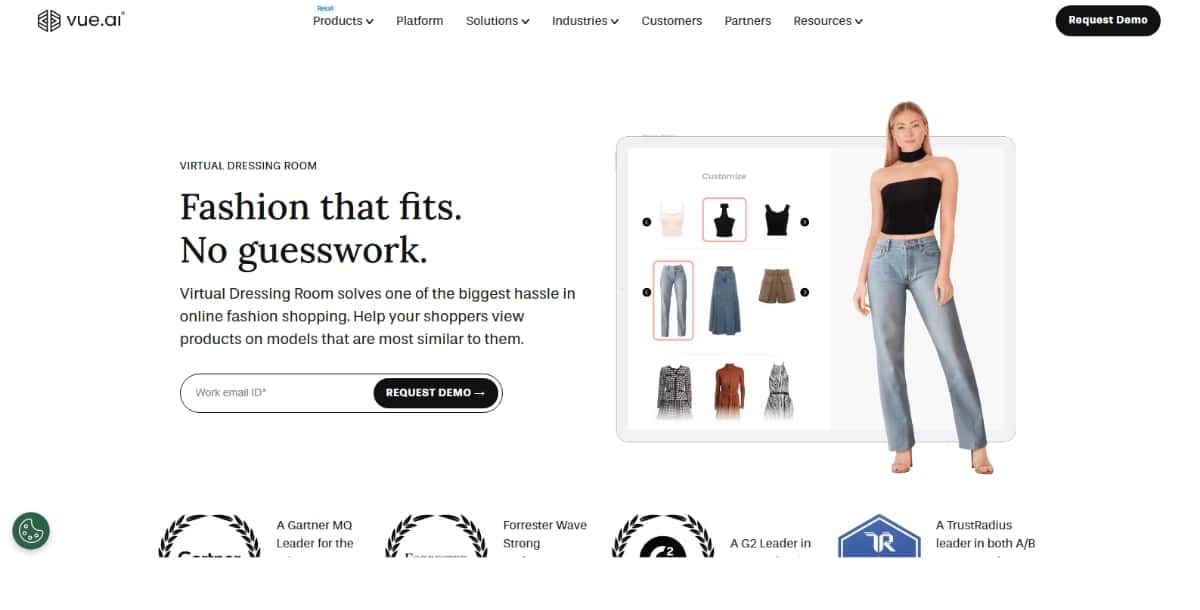
Vue.ai provides an AI-powered virtual dressing room that allows shoppers to visualize and style products on diverse models in real-time.
Suggested Read: 10 Best AI Hairstyle Changers for Testing Hairstyles on My Face
Features:
- Real-time visualization on models of various shapes, sizes, and ethnicities
- AI-generated outfit recommendations
- Integration with e-commerce platforms
- Customizable model library
Pros:
- Enhances personalization and inclusivity
- Improves customer engagement
- Reduces return rates
Cons:
- May require significant integration efforts
- Pricing may be higher for small businesses
Best For: Large retailers aiming to offer a personalized and inclusive shopping experience.
2. Revery.ai
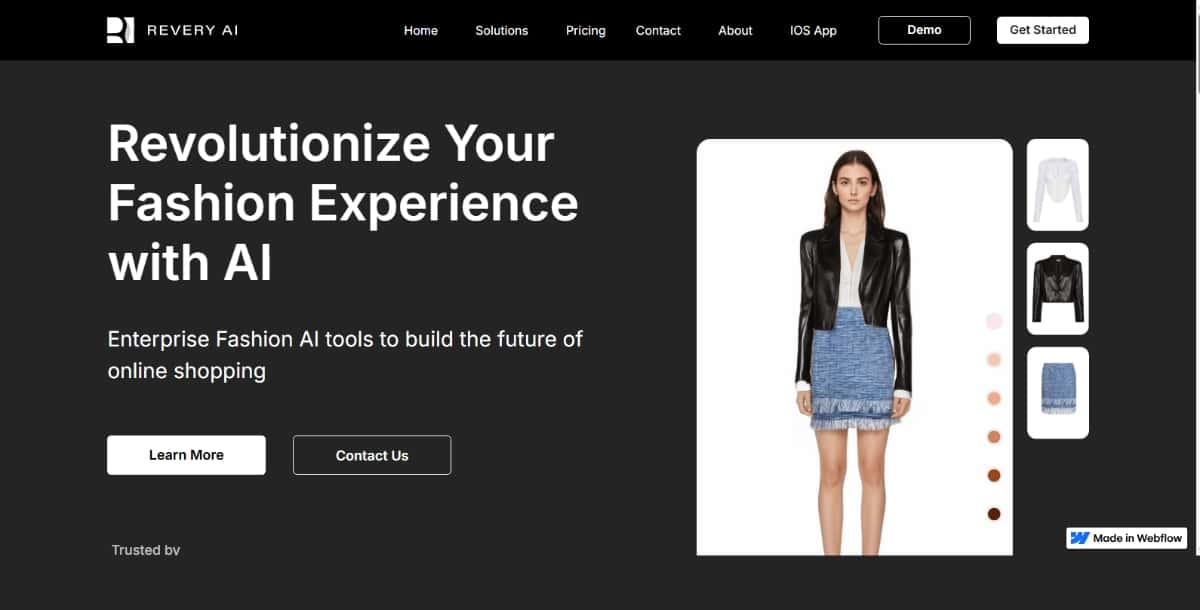
Revery.ai specializes in scalable virtual dressing room solutions, leveraging AI and computer vision to enhance online engagement and conversion.
Features:
- AI-powered virtual fitting room technology
- Realistic visualization of clothing on models
- Scalable solutions for fashion retailers
Pros:
- Enhances online shopping experience
- Increases customer engagement
- Reduces return rates
Cons:
- May require technical expertise for integration
- Limited information on pricing and support
Best For: Fashion retailers seeking to improve online engagement through realistic virtual try-ons.
3. 3DLOOK YourFit
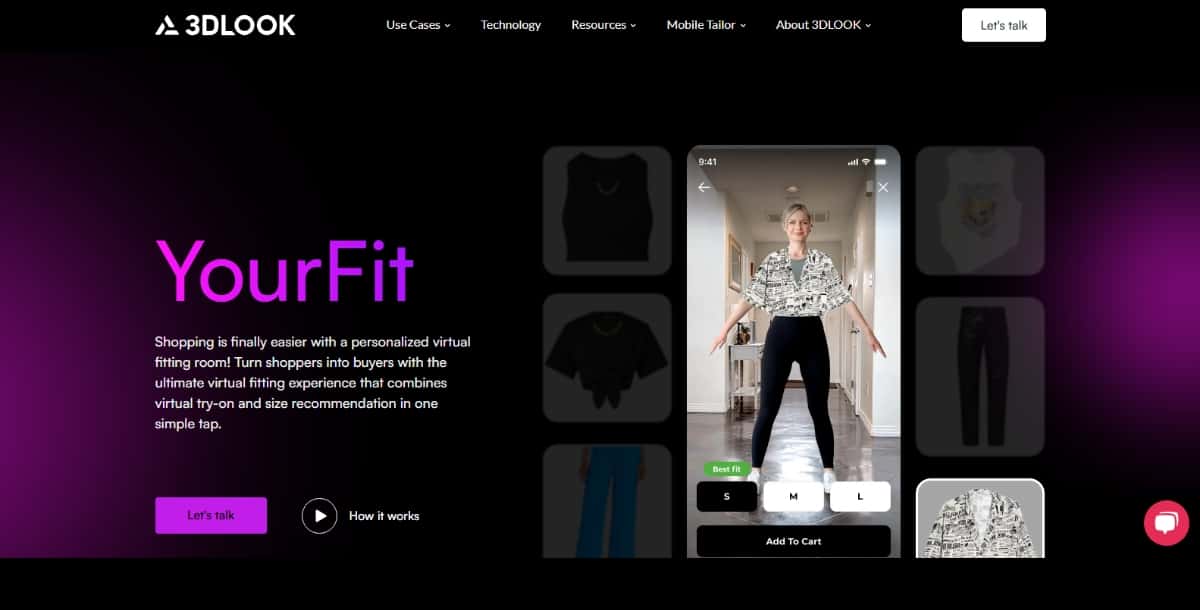
YourFit by 3DLOOK combines virtual try-on and size recommendation tools to provide a personalized shopping experience.
Features:
- 3D body scanning for accurate sizing
- Virtual try-on with photorealistic output
- Personalized size recommendations
- Integration with e-commerce platforms
Pros:
- Reduces size-related returns
- Enhances customer confidence
- Easy integration with existing platforms
Cons:
- Requires customers to complete a body scanning process
- May have a learning curve for new users
Best For: Retailers focused on providing accurate sizing and reducing return rates.
4. Klarna

Klarna, known for its payment solutions, has expanded into virtual dressing rooms, offering AR-powered try-on experiences.
Features:
- Augmented reality try-on technology
- Integration with Klarna’s payment solutions
- Personalized shopping experiences
Pros:
- Combines shopping and payment in one platform
- Enhances customer convenience
- Offers personalized recommendations
Cons:
- Limited to brands partnered with Klarna
- May not offer advanced virtual try-on features
Best For: Retailers already using Klarna’s payment solutions looking to add virtual try-on capabilities.
5. Style.me
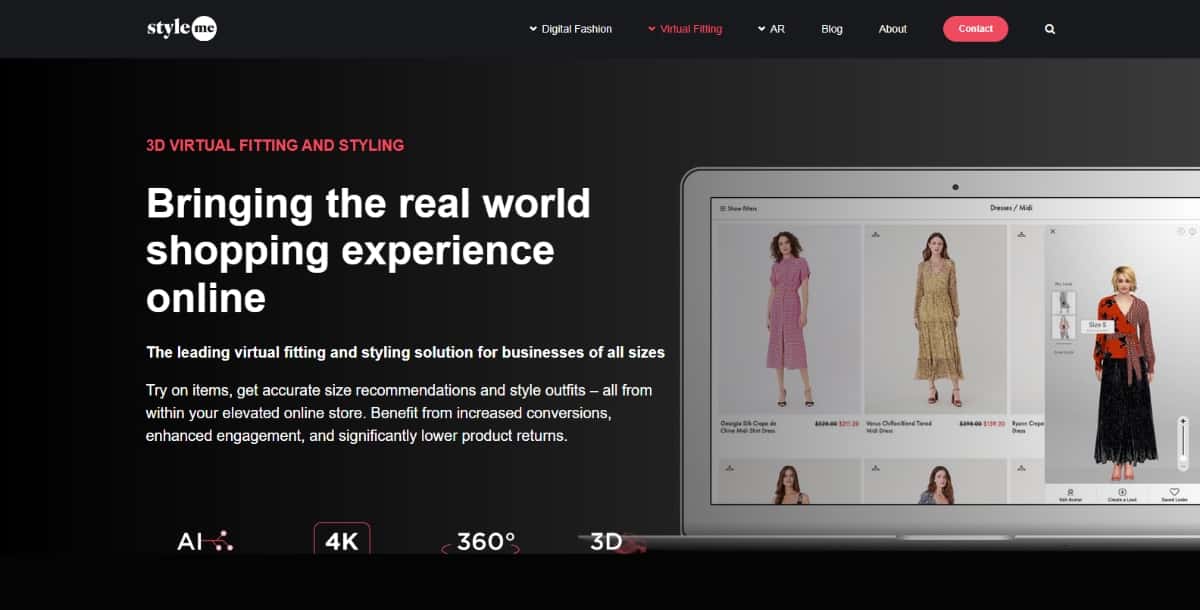
Style.me provides a 3D virtual fitting room that allows shoppers to create personalized avatars and try on clothing virtually.
Suggested Read: Best Virtual Try On APIs in 2026
Features:
- Personalized 3D avatars
- Virtual try-on with size recommendations
- Outfit styling and visualization
- Integration with e-commerce platforms
Pros:
- Enhances personalization
- Improves customer engagement
- Reduces return rates
Cons:
- May require significant integration efforts
- Pricing may be higher for small businesses
Best For: Fashion retailers aiming to offer a personalized and interactive shopping experience.
6. Pixazo AI Virtual Dressing Room
Pixazo is a platform that enables businesses to create AI-powered virtual dressing rooms without any technical or design expertise. It’s designed for ease of use and quick dress selection.
Features:
- Drag-and-drop interface for easy customization
- AI-powered precision and accurate virtual try on
- AI-driven outfit assistance
- User-friendly design suitable for small businesses
Pros:
- No technical skills required
- Affordable pricing plans
- Easy-to-use Interface and quick outfit trial
- Seamless Virtual Try On API integration
Cons:
- Limited advanced features compared to specialized platforms
- May not support complex 3D modeling
Best For: Small to medium-sized retailers looking for an easy-to-implement virtual dressing room solution.
Suggested Read: Introducing FASHN Virtual Try-On V1.6 API on Pixazo for High-Resolution Virtual Try-On
7. Wanna.fashion

Wanna.fashion offers AR-powered virtual try-on solutions for fashion and accessories, enabling customers to see how products look in real-time.
Features:
- Augmented reality try-on technology
- Real-time visualization of products
- Integration with e-commerce platforms
- Mobile-first design
Pros:
- Enhances customer engagement
- Easy integration with existing platforms
- Improves conversion rates
Cons:
- Limited to AR try-on features
- May not offer advanced size recommendations
Best For: Retailers focusing on accessories and looking to enhance customer engagement through AR technology.
| Tool | Key Features | Pros | Cons | Best For |
|---|---|---|---|---|
| Vue.ai | AI styling, virtual models of diverse sizes, real-time outfit visualization | Inclusive, advanced personalization | Higher cost, complex setup | Large retailers and fashion brands |
| Revery.ai | Realistic virtual try-on, multi-body support, AI outfit generation | Photorealistic visuals, scalable | Requires integration effort | Brands needing high-end realism |
| 3DLOOK YourFit | 3D body scanning, fit prediction, personalized sizing | High accuracy, reduces returns | Requires user input (body scan) | Brands focused on precise fit and size guidance |
| Klarna | AR overlays, integrated shopping and checkout, influencer collaborations | Seamless try-on and checkout experience | Limited to partnered retailers | Shoppers using Klarna and partner brands |
| Style.me | 3D avatar creation, virtual styling, body type adaptation | Engaging UI, inclusive sizing options | Some visuals may lack realism | Fashion e-commerce platforms |
| Pixazo AI Virtual Dressing Room | No design skills required, AI outfit Virtual Try on, user friendly | Easy to use, affordable, quick outfit result | Limited 3D and customization features | Small businesses and startups |
| Wanna.fashion | AR try-on for apparel and accessories, mobile-first interface | Strong mobile UX, fast and interactive | Limited sizing accuracy | Accessory brands and mobile-driven retailers |
Future Trends in Virtual Dressing Rooms
AI virtual dressing rooms are evolving fast. As more brands go digital, these tools are getting smarter, more accurate, and more personalized. Here are the top trends shaping the future of virtual try-ons in 2026:
- Generative AI for Customization: Brands are using generative AI to show how clothes look in different styles, fabrics, and colors. This makes it easier for shoppers to explore more options before buying.
- Body Inclusivity and Realism: Modern tools now support a wide range of body types, skin tones, and sizes. This shift toward inclusivity helps users see a more realistic version of themselves wearing the product.
- Social and Metaverse Integration: Virtual dressing rooms are starting to appear in metaverse platforms and social apps. Shoppers can try on outfits and share them with friends directly on social media or inside virtual worlds.
- AI-Powered Styling Assistants: Some platforms now offer virtual stylists powered by AI. These assistants suggest complete outfits based on a user’s style, body shape, and purchase history.
- Focus on Data Privacy: As tools collect more body data, privacy has become a key concern. Platforms are investing in secure storage and transparent data policies to protect user information.
These trends show that virtual dressing rooms are becoming more than just a fitting tool. They are turning into full shopping assistants that combine style, convenience, and smart technology.
Suggested Read: 10 Best AI Clothes Changer Tools in 2026
Conclusion
AI virtual dressing rooms are no longer just a trend, they are now a key part of online fashion retail. In 2026, these AI design tools are helping shoppers make better decisions, while allowing brands to lower return rates and boost engagement.
From beginner-friendly platforms like Pixazo to advanced solutions like 3DLOOK and Revery.ai, each tool offers something unique. Whether you’re a small business or a large retailer, choosing the right virtual dressing room depends on your goals, audience, and level of tech integration.
As AI continues to evolve, expect even more realistic, inclusive, and interactive features in the future. The right virtual try-on solution can turn your store into a smarter, more personalized shopping experience.
Deepak Joshi
Author · Pixazo
Deepak writes about generative AI models, APIs, and the workflows teams use to ship them. Reviewed by Abhinav Girdhar.