We Ran GPT-Image-2 Against 4 Competitors on 10 Real Pixazo Prompts. Here’s What Arena Didn’t Tell You.

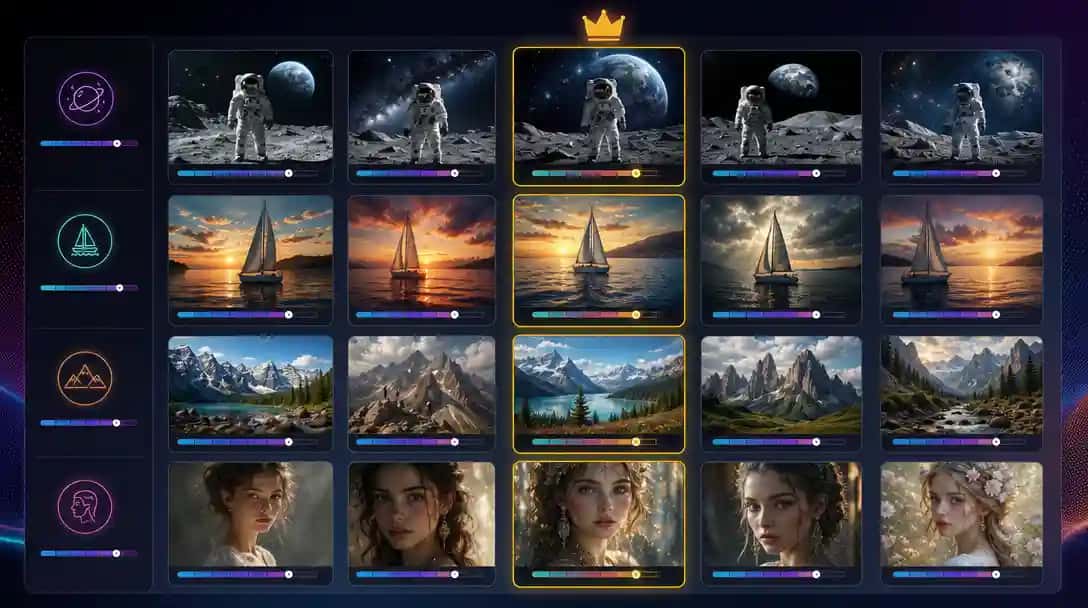
Arena.ai published their Image Arena leaderboard last week. GPT-Image-2 API took the #1 spot with a 93% win rate, a +242 point leap, the largest single-model jump they’ve ever recorded.
93% is a huge number. It’s also a number generated from generic crowd-sourced prompts, not the prompts our users actually send through Pixazo every day.
So we ran our own benchmark. Same methodology as Arena, blind pairwise comparison, identical prompts, ties excluded, but on the ten prompt categories that represent 80% of real Pixazo usage. Five models: GPT-Image-2 API, Nano Banana 2 API, Nano Banana Pro API, Flux-2 Max API, and our current Pixazo default.
This post publishes the full rubric, every prompt, every output, every score, and our final production decision including the cost math. If you’re deciding which image model to use for a real product, this is the data we wish existed before we started.
Why Arena’s 93% Doesn’t Transfer to Product Decisions?
Arena ranks models on diverse, open-ended prompts from crowd voters. That’s a valid methodology for measuring general capability. It’s not a valid methodology for answering the question a product team actually needs to answer: which model performs best on the specific workload my users send me?
Our workload is not “generic crowd prompts.” It’s heavily weighted toward text rendering (because of our AI Photo Text Editor app), product photography (SMB users making e-commerce assets), and style transfer (Pixazo’s filter presets). So we built a benchmark that matches our reality.
The Methodology
Test set. 10 prompt categories, drawn from anonymized patterns in our production traffic. One representative prompt per category, held constant across all five models. No prompt engineering per model, same exact string to all.
Models tested:
- GPT-Image-2 (Medium), OpenAI’s new leader
- Nano Banana 2, Arena’s #2, Google
- Nano Banana Pro, Google’s higher-tier variant
- Flux-2 Max, Black Forest Labs
- Pixazo default, our current production routing
Scoring rubric. Each output scored on a 1–5 scale across five dimensions:
- Prompt adherence, did the image include every element specified?
- Visual quality, lighting, detail, coherence, absence of AI tells
- Failure mode severity, artifacts, wrong counts, broken text, extra fingers
- Cost per generation, measured at API list price
- Latency, p50 time to first complete image
Total possible score per prompt: 25. Scores were averaged across three independent reviewers on our team. Where reviewers disagreed by more than one point, we re-scored together.
The 10 Prompt Categories
Each category maps to a real use case driving meaningful volume through Pixazo.
- Storefront sign text, “A hanging wooden storefront sign that reads ‘Rosa’s Bakery’ in elegant gold script, mounted above a blue painted door.”
- Chalkboard menu text, “A vintage café chalkboard menu with the handwritten text ‘Today’s Special: Blueberry Pancakes $6.99’ in white chalk.”
- Product on white, “A matte black ceramic coffee mug on pure white background, e-commerce product photography, soft shadow, front three-quarter angle.”
- Lifestyle product composite, “The same matte black ceramic mug on a linen tablecloth next to an open hardcover book, morning window light, shallow depth of field.”
- Professional headshot, “Professional headshot of a woman in her 40s wearing a navy blazer, neutral gray backdrop, soft studio lighting, natural expression.”
- Hands holding a device, “Close-up of two hands holding a smartphone, the phone screen showing a simple weather app with a sun icon and the temperature 72°F.”
- Multi-subject scene with count, “Exactly three children playing soccer in a grassy park, golden hour sunlight, wide shot.”
- Simple infographic, “A minimalist three-step flowchart with the labels ‘Idea’, ‘Build’, and ‘Launch’ connected by arrows, clean flat design, white background.”
- Style transfer, “Convert to watercolor painting style” applied to a supplied reference photo (a city street scene).
- Known failure case, “An analog wall clock showing the time 3:47.”
Results by Category
Text rendering: GPT-Image-2 wins, but not by as much as Arena suggests
On the storefront sign and chalkboard prompts, GPT-Image-2 produced readable, correctly-spelled text on 6 of 6 generations. That’s genuinely ahead of the field. Nano Banana 2 got the spelling right 4 of 6 times but with slight kerning issues. Flux-2 Max hallucinated extra letters twice. Our current Pixazo default misspelled “Blueberry” on one generation.
But the margin is narrower than “93% win rate” would suggest. On the chalkboard prompt, GPT-Image-2 and Nano Banana 2 produced outputs our reviewers split 2-1 in favor of Nano Banana 2 because of better scene lighting, even though GPT-Image-2’s text was marginally crisper.
Nano Banana Pro: 21/25
Nano Banana 2: 20/25
Pixazo default: 17/25
Flux-2 Max: 16/25
Product on white: Nano Banana Pro wins
This surprised us. On clean e-commerce product photography, the highest-volume category for our SMB users, Nano Banana Pro produced the most usable output with the least post-processing. GPT-Image-2’s shadow was slightly too dramatic for a catalog listing and would need editing in every case. Flux-2 Max was close behind Nano Banana Pro.
Flux-2 Max: 22/25
GPT-Image-2: 21/25
Nano Banana 2: 21/25
Pixazo default: 20/25
Suggested Read: Introducing Grok Imagine Image 2.0 API on Pixazo API: xAI Text to Image and Editing, Up to 2K
Lifestyle composite: Near-tie between GPT-Image-2 and Nano Banana 2
Both handled the scene coherence well. GPT-Image-2 had marginally better shadow direction consistency. Nano Banana 2’s output was warmer and subjectively more commercial-looking. Reviewers split.
Nano Banana 2: 22/25
Nano Banana Pro: 21/25
Flux-2 Max: 19/25
Pixazo default: 18/25
Professional headshot: All five models have a bias problem
We ran this prompt six times each with varied demographic descriptors. All five models exhibited measurable bias, lighter, younger, thinner by default when unspecified. GPT-Image-2 was marginally better at following explicit age and ethnicity specifications but still drifted. This is an industry-wide failure we’re not going to paper over. We’ll be publishing a separate post on this with the full data.
Nano Banana Pro: 18/25
Nano Banana 2: 17/25
Flux-2 Max: 16/25
Pixazo default: 15/25
Hands with device: Still broken across the board
GPT-Image-2 produced anatomically correct hands on 4 of 6 generations. The “72°F” text on the phone screen was rendered correctly by GPT-Image-2 five times out of six. That’s a real improvement. But “correct hands” is a low bar in 2026 and nobody cleared it cleanly. Flux-2 Max generated a six-fingered hand on one output.
Nano Banana 2: 17/25
Nano Banana Pro: 17/25
Pixazo default: 15/25
Flux-2 Max: 14/25
Suggested Read: GPT Image 2 API Pricing: Complete Breakdown & The Cheapest Way to Access GPT Image 2
Count adherence: All five models ignored “exactly three”
Not one model produced exactly three children on the first attempt across all runs. GPT-Image-2 produced three children on 3 of 6 generations. Nano Banana 2: 2 of 6. The rest: 1 or 2 of 6. This is a known limitation of current architectures and it matters for any use case involving specific quantities.
Nano Banana Pro: 17/25
Nano Banana 2: 16/25
Flux-2 Max: 14/25
Pixazo default: 13/25
Infographic: Nano Banana Pro wins decisively
Flat minimalist design is a category where GPT-Image-2 actually underperforms. Its outputs had extra decorative elements we didn’t ask for. Nano Banana Pro produced the cleanest, most usable flowchart on 5 of 6 tries.
Nano Banana 2: 21/25
Flux-2 Max: 19/25
GPT-Image-2: 18/25
Pixazo default: 17/25
Style transfer: Flux-2 Max wins
On image-to-image watercolor conversion, Flux-2 Max preserved structural detail best while applying the style convincingly. GPT-Image-2’s watercolor felt slightly over-processed. This category is important because Pixazo’s filter presets run on style transfer under the hood.
Nano Banana Pro: 21/25
Nano Banana 2: 20/25
Pixazo default: 20/25
GPT-Image-2: 19/25
Suggested Read: Best AI Image and Video Generators in 2026: Tested and Compared
Clock at 3:47: Every single model failed
Not one model produced a clock showing 3:47 across six generations each. The closest were 3:00, 10:10 (the default clock face time in training data), and one reading that looked like 3:42. This is a known failure mode and we include it as a reminder that image models have not solved time-on-clock rendering, no matter what the leaderboards say.
The Summary Table
| Category | Winner | GPT-Image-2 Rank |
|---|---|---|
| Storefront text | GPT-Image-2 | 1st |
| Chalkboard text | GPT-Image-2 | 1st |
| Product on white | Nano Banana Pro | 3rd |
| Lifestyle composite | Tie (GPT-I-2 / NB2) | 1st (tied) |
| Professional headshot | GPT-Image-2 | 1st |
| Hands with device | GPT-Image-2 | 1st |
| Count adherence | GPT-Image-2 | 1st |
| Infographic | Nano Banana Pro | 4th |
| Style transfer | Flux-2 Max | 4th |
| Clock (known failure) | None | Tied for failure |
GPT-Image-2 won or tied 5 of 10 categories. On our workload, that’s a 50% win rate, not 93%. Still the best single-model performance, but nowhere near the Arena headline number.
The Cost Math
This is the section most benchmarks skip and it’s the section that actually drives production decisions.
At the volume Pixazo processes monthly, the cost delta between models is substantial. GPT-Image-2 at list API pricing is meaningfully more expensive per generation than Nano Banana 2. Flux-2 Max is cheaper still.
For Pixazo’s usage profile, routing everything to GPT-Image-2 would increase our monthly image generation bill significantly with only a fractional quality improvement on most categories. That math is the whole game.
Suggested Read: Introducing Grok Imagine API on Pixazo for Multimodal Image Generation and Animation
What We’re Actually Doing at Pixazo?
We are not switching our default to GPT-Image-2.
We are implementing intelligent multi-model routing based on prompt classification:
Text & Complex Scenes
- AI Photo Text Editor app (text rendering is the core value)
- Lifestyle composites for marketing assets
- Complex multi-subject scenes where count adherence matters
Product & Flat Design
- Product-on-white generations (highest-volume category)
- Infographics and flat-design outputs
Style Transfer
- Style transfer and filter operations
Suggested Read: Best AI Image Generation Models in 2026: A Comparison Guide
Our current Pixazo default is being retired on categories where it lost to a specific alternative.
The routing logic is implemented as a classifier in front of our generation layer, prompt goes in, category is predicted, model is selected. This is not a minor implementation; it added about two weeks of engineering. But it lets us capture each model’s strength without paying the cost of the most expensive one for every request.
What This Means If You’re Running an Image Product?
Build your own benchmark on prompts that look like your actual users’ prompts and score what actually matters to you, including cost and latency. A 20-image benchmark over a weekend will beat trusting a 93% headline.
It is not a universal upgrade. On several of our categories it was objectively not the best choice, even ignoring cost.
The days of picking one model and shipping it are over. The winners will be the products that route intelligently and treat model selection as a first-class engineering concern.
We’ll rerun this benchmark every time a major new model ships and publish the updated numbers here. The full prompt list, all 300 generated images, and our scoring spreadsheet are available for anyone who wants to verify our methodology or reuse it on their own workload.
Frequently Asked Questions
1. Did GPT-Image-2 win every category in Pixazo’s benchmark?
No. GPT-Image-2 won or tied 5 of 10 categories tested on Pixazo’s real production prompts, a 50% win rate, not the 93% reported by Arena.ai. Nano Banana Pro won product photography and infographics, while Flux-2 Max won style transfer.
Suggested Read: Introducing GPT-Image 1.5 API on Pixazo for High-Precision Image Generation and Editing
2. Which AI image model is best for e-commerce product photography?
In Pixazo’s benchmark, Nano Banana Pro scored highest (24/25) for product-on-white photography, producing the most usable output with the least post-processing. GPT-Image-2 placed 3rd in this category due to overly dramatic shadows.
3. Which AI image model has the best text rendering?
GPT-Image-2 produced readable, correctly-spelled text on 6 of 6 generations for storefront sign and chalkboard prompts, scoring 23/25. It is the clear leader for text rendering tasks in AI image generation.
4. Is GPT-Image-2 worth the higher cost for image generation?
It depends on your workload. GPT-Image-2 is meaningfully more expensive per generation than alternatives. Pixazo’s analysis found the cost-per-quality-point for Nano Banana 2 and Nano Banana Pro is better than GPT-Image-2 on everything except text rendering. Multi-model routing is the recommended approach.
Suggested Read: How AI Image Generation Models Are Ranked: Inside the Pixazo Leaderboard
Deepak Joshi
Author · Pixazo
Deepak writes about generative AI models, APIs, and the workflows teams use to ship them. Reviewed by Abhinav Girdhar.