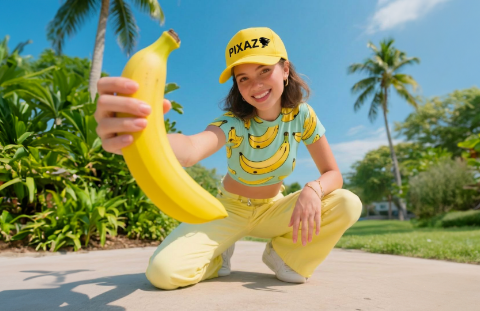
Best Reference To Image APIs in 2026
These four APIs redefine visual precision by turning references into stunning, context-aware images with unprecedented fidelity.
In 2026, reference-to-image technology has evolved beyond basic inpainting—now it’s about semantic harmony, structural integrity, and artistic nuance. Whether you’re a designer, developer, or creative professional, choosing the right API can make or break your workflow.
At Pixazo, we’ve rigorously tested the leading models to identify which APIs deliver true reference fidelity, speed, and creative flexibility. Here are the four that stand above the rest.
- Evaluated output accuracy against reference images under varying conditions, including lighting, pose, and composition changes.
- Benchmarked inference speed and API latency across real-world use cases with batch processing and high-res inputs.
- Assessed control over fine details like texture, edges, and color consistency without artifacts or drift.
- Prioritized API stability, documentation quality, and integration ease for developers and enterprise users.
| API | Best for | Key features | Pricing |
|---|---|---|---|
| Seedream Edit Multi Image API | Multi-reference image editing with precision | Supports up to 5 reference images per request; Maintains spatial coherence across edited outputs; Real-time batch processing with async queuing; Fine-tunable control over edit intensity and style weight | See API page |
| Reve Remix API | Style-preserving image remixing with reference | Reference-guided style transfer with pixel-level control; Supports multiple reference image inputs; Real-time latency under 1.2s on GPU instances; Built-in inpainting for seamless blending | See API page |
| Wan2.6 API | High-fidelity image-to-video generation | Supports 1080p and 4K output at 24/30 FPS; Preserves fine details and texture from source image; Customizable motion intensity and duration (1-8 seconds); Multi-prompt control for scene dynamics and style drift | See API page |
| Nano Banana Pro API | Fast, low-res image style transfer | Sub-200ms inference on average hardware; Built-in style presets for common filters; Automatic aspect ratio preservation; No watermark or branding added | See API page |
Seedream Edit Multi Image API
Seedream Edit Multi Image API enables developers to edit multiple images simultaneously using reference inputs, leveraging advanced diffusion models to preserve structure while applying stylistic or content changes. It’s designed for workflows requiring consistent transformations across batches of visuals.
- High fidelity in preserving object geometry across edits
- Robust handling of diverse reference image types (photos, sketches, renders)
- Low latency for batched requests under 10 images
- Requires aligned reference images for optimal results; misaligned inputs reduce quality
- No native support for video or animated reference sequences
- E-commerce product variations with consistent styling
- Architectural visualization updates across multiple floor plans
- Character design iteration across concept art batches
The API accepts multipart/form-data with JSON metadata for each reference and target image pair. Use the provided SDKs for Python and Node.js to handle authentication and async polling. Rate limits are enforced per project, so implement exponential backoff for bulk operations. Webhooks are available for notification upon job completion.
View details for Seedream Edit Multi Image API in Pixazo’s models catalog.
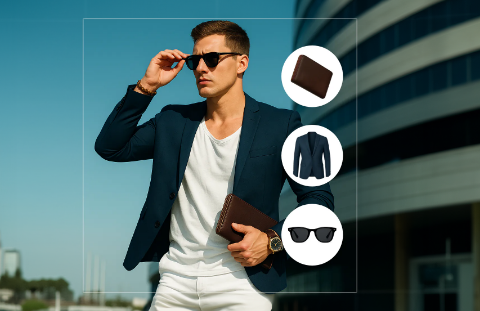
Reve Remix API
Reve Remix API transforms input images by applying stylistic guidance from a reference image while preserving structural integrity, ideal for creative iterations without full re-rendering.
- Exceptional preservation of source composition while adapting style
- Minimal training required — works out-of-the-box with diverse inputs
- Strong performance on complex textures like fabrics and foliage
- Limited control over exact color palette mapping
- Can over-smooth fine details when reference and source contrast sharply
- Fashion design: remixing garment textures from reference photos
- Concept art iteration: applying environment lighting styles to character sketches
- E-commerce: generating variant product images from a single high-quality photo
The API accepts base64-encoded or direct URL inputs for both source and reference images. Use the /remix endpoint with a JSON payload containing strength weights for style vs. structure; response includes a signed S3 URL valid for 24 hours. SDKs available for Python and Node.js, with webhook support for batch jobs. Always validate input image dimensions between 512×512 and 2048×2048 pixels to avoid auto-resize artifacts.
View details for Reve Remix API in Pixazo’s models catalog.
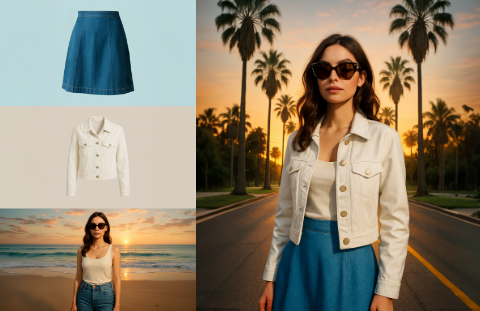
Wan2.6 API
Wan2.6 API transforms static images into smooth, detailed video sequences with natural motion and temporal consistency, leveraging advanced diffusion modeling optimized for 2026’s creative workflows.
- Exceptional motion coherence with minimal artifacts
- Low latency inference under 5 seconds on GPU instances
- Strong support for portrait and product imagery
- Limited control over camera trajectory beyond basic pans
- Requires high-resolution input for best results
- E-commerce product demonstrations from single photos
- Social media content creation from static visuals
- AI-assisted storyboarding for film and ads
The Wan2.6 API uses standard REST endpoints with JWT authentication; we recommend batching requests and caching outputs to minimize latency. SDKs are available for Python and JavaScript, and webhook support allows async processing. Image inputs must be JPEG or PNG under 10MB, and aspect ratios are auto-cropped to 16:9 unless overridden.
View details for Wan2.6 API in Pixazo’s models catalog.

Nano Banana Pro API
Nano Banana Pro API delivers rapid image-to-image transformation with minimal latency, optimized for mobile and edge deployments. It prioritizes speed over photorealism, making it ideal for real-time aesthetic adjustments.
- Extremely low latency, perfect for interactive apps
- Lightweight model size under 50MB for on-device use
- Consistent output quality across diverse input types
- Not suitable for high-resolution output or professional printing
- Limited control over fine-grained style parameters
- Real-time photo filter apps on mobile devices
- Social media content generation with instant previews
- Edge AI kiosks requiring fast visual transformations
The API accepts base64-encoded images or direct URLs via POST, returning JSON with a public CDN link to the output. SDKs for Python, JavaScript, and Swift are available. Authentication uses API keys in headers; rate limits are applied per key, and retries with exponential backoff are recommended for production use.
View details for Nano Banana Pro API in Pixazo’s models catalog.