
How E-commerce Stores Can Stand Out Using Virtual Try-On and Outfit Transition Videos?

Table of Contents
- Why Are Virtual Try-On Experiences and Transition Videos So Effective for E-commerce?
- How Do Smooth Transitions Enhance the Viewing Experience?
- How Does AI Expand What’s Possible in Fashion Transitions?
- How to Create Virtual Try-on Videos with Pixazo?
- Why Are AI Transitions Valuable for Fashion Brands and eCommerce?
- What Creative Opportunities Do Outfit Transition Videos Unlock?
- How Can Outfit Transitions Enhance Storytelling and Branding?
- How Are Advanced VTON Systems Shaping the Future of Fashion Content?
- How Do AI Outfit Transitions Fit Into Modern Marketing Strategies?
- What Are the Key Takeaways?
- Frequently Asked Questions (FAQs)
Why Are Virtual Try-On Experiences and Transition Videos So Effective for E-commerce?
Brands often struggle to recreate the tactile, hands-on nature of in-store shopping in a digital space. Virtual Try-On solutions and outfit transition visuals help close that gap. They give customers a more intuitive sense of how garments look when worn, how styling changes, and how outfits come together within real-world contexts. Transition videos in particular add a dynamic storytelling layer, presenting clothing not just as products, but as part of a lifestyle narrative.Virtual try-on turns online shopping from a static scroll into an experience, shoppers aren’t just looking at clothes; they’re seeing themselves in the story. David Pagotto, Founder & Managing Director, SIXGUN, an award-winning marketing agency.
Under this section, it’s also important to acknowledge how tools like an AI Clothes Changer support early visualization. These tools help brands simulate consistent looks across models, improve personalization, and generate more polished imagery for transitions. When combined, these elements create shopping experiences that feel more alive, interactive, and trustworthy.
Shoppers rely heavily on visual clarity when purchasing clothes online. Smooth transitions, realistic try-on previews, and consistent visuals help reduce friction during decision-making. With the growing availability of solutions like AI Virtual Try-On Room for eCommerce, brands have the chance to stand out by offering an experience that feels both futuristic and practical.
Here is a guide on how an AI hairstyle changer is transforming the way people explore new looks you can read about.
How Do These Experiences Improve Viewer Engagement and Product Interaction?
Attention spans on digital platforms are short, and brands need content that captures interest in seconds. Transition videos are highly effective because they combine motion, novelty, and aesthetic appeal. They guide the viewer’s eye through a visually satisfying transformation, making the product more memorable. This is especially useful for apparel categories where styling versatility is a major selling point.
Virtual Try-On experiences complement this by letting customers interact directly with products. When shoppers can see garments on models or avatars that resemble them, they feel more confident about fit and aesthetic. Integrations using API solutions such as the Pixelforge Clothing VTON API help maintain consistency across visuals, ensuring garments appear natural and accurately shaped in both static previews and dynamic edits.
Higher engagement often translates into more time spent on product pages, more shared content, and improved overall brand visibility. When customers actively interact with clothing visuals, they form stronger impressions that lead to more informed purchase decisions.
How Do Realism and Visual Accuracy Build Customer Trust?
Trust is one of the most valuable currencies in the world of online retail. Customers want to feel confident that what they see is what they will receive. Hyper-realistic visuals—whether generated through transitions or Virtual Try-On experiences—help reduce the gap between expectation and reality.
For example, accessories often present challenges in digital representation due to their shapes, textures, and relative positions on the body. Solutions like the Pixelforge Accessories VTON API help resolve these obstacles by accurately aligning accessories with poses and maintaining natural proportions. This creates a cohesive, believable look that shoppers are more likely to trust.
Realism also reduces returns. When products are shown in realistic lighting, accurate fit, and styled transitions, customers make more confident decisions. This benefits both buyers and sellers by reducing logistical costs and dissatisfaction.
How to Create Virtual Try-on Videos with Pixazo?
Here is a step by step guide on how to create outfit transition videos with Pixazo:
Step 1: Head to Pixazo's AI Image Generator
Go to Pixazo's AI Image Generator and click on Get Started:
Step 2: Log In or Sign Up for Pixazo

Log in into your Pixazo account or sign up for an account if you don't already have one.
Step 3: Upload Images and Prompts
Once you're logged in, upload a base image and an outfit image and select Nano Banana Pro for generating the image. Then, enter a prompt and click on Generate:
Base image:
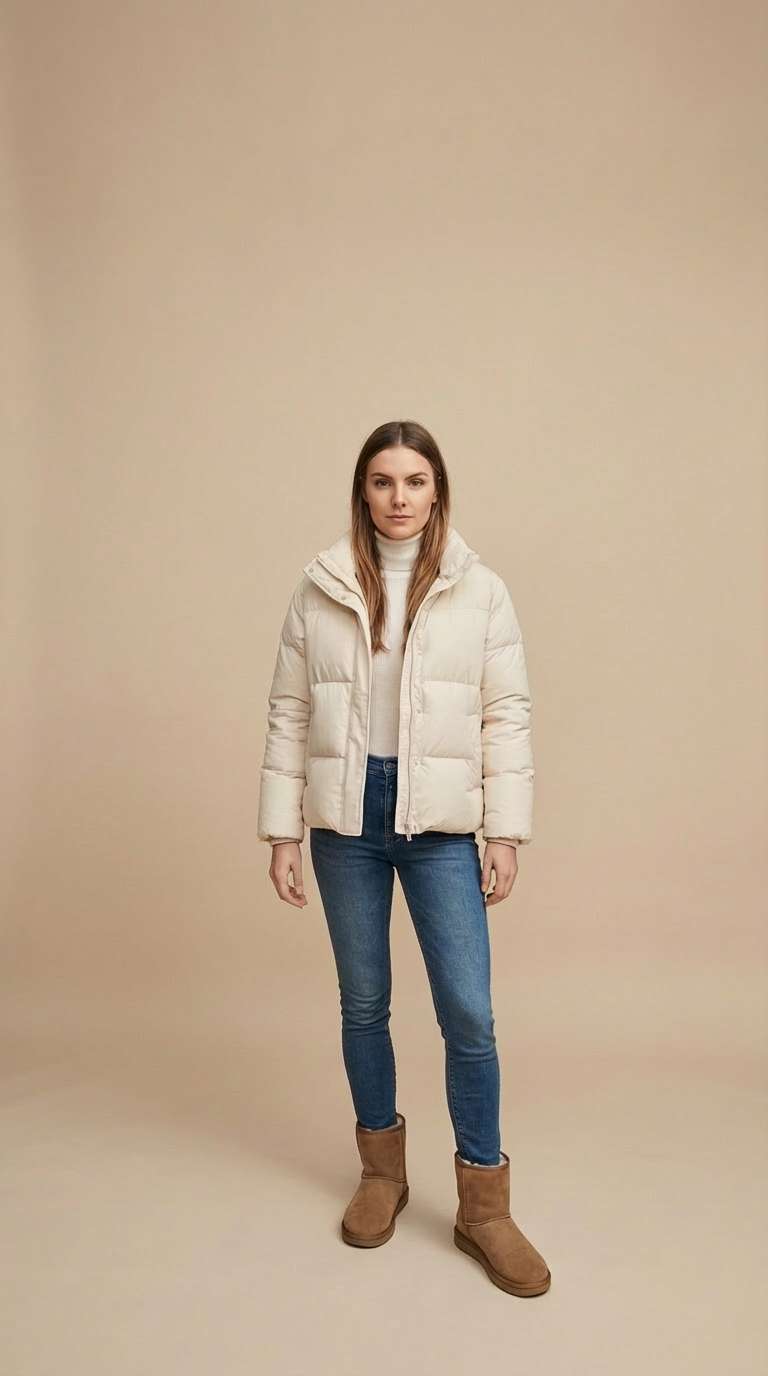
Outfit image:
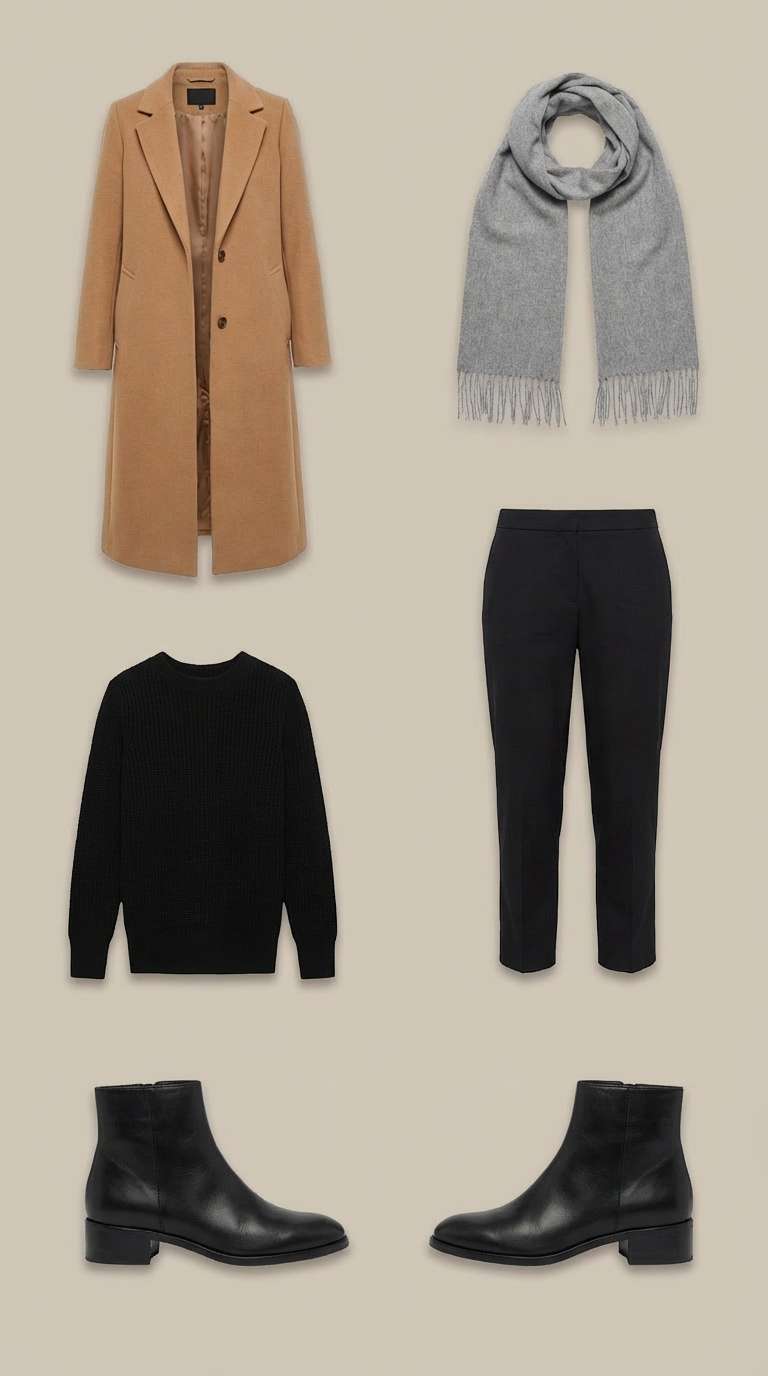
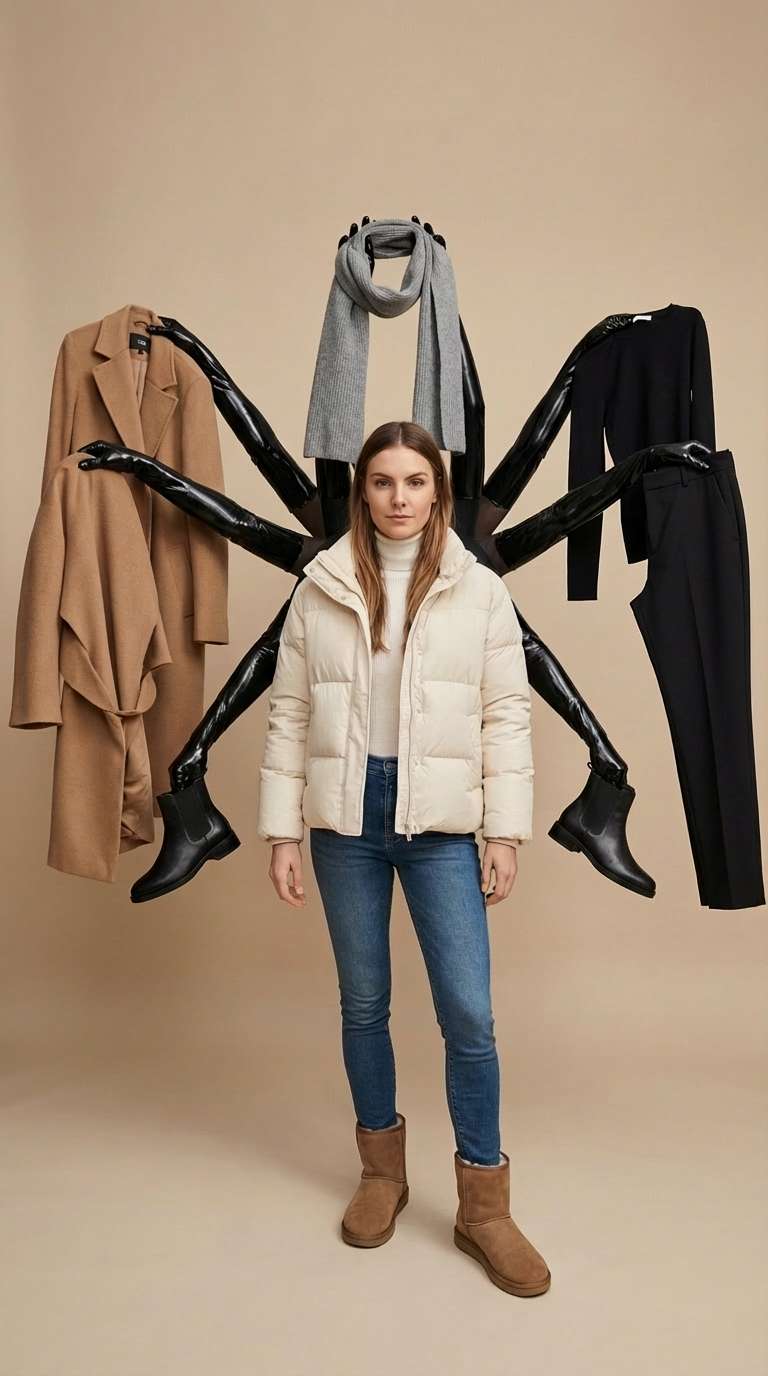
Prompt: "Create a high-fashion editorial image featuring the same woman, same outfit from the provided photos, standing calmly in the center of the frame against a clean, minimal beige studio backdrop. She maintains a neutral facial expression, looking straight ahead with her arms relaxed by her sides. Behind her, generate multiple symmetrical, glossy black latex-gloved arms radiating outward like a styling goddess motif. Each arm should be holding items from her two outfits, arranged in a balanced circular composition: From Outfit 2: camel long coat, grey scarf, black top, black trousers, black leather ankle boots. The floating outfit pieces should appear as if they are part of an elegant fashion transformation sequence, displayed clearly and aesthetically. Lighting must be soft, studio-clean, and evenly diffused, emphasizing luxury and editorial sophistication. The final image should feel surreal, polished, and stylish—similar to high-end fashion campaign art."
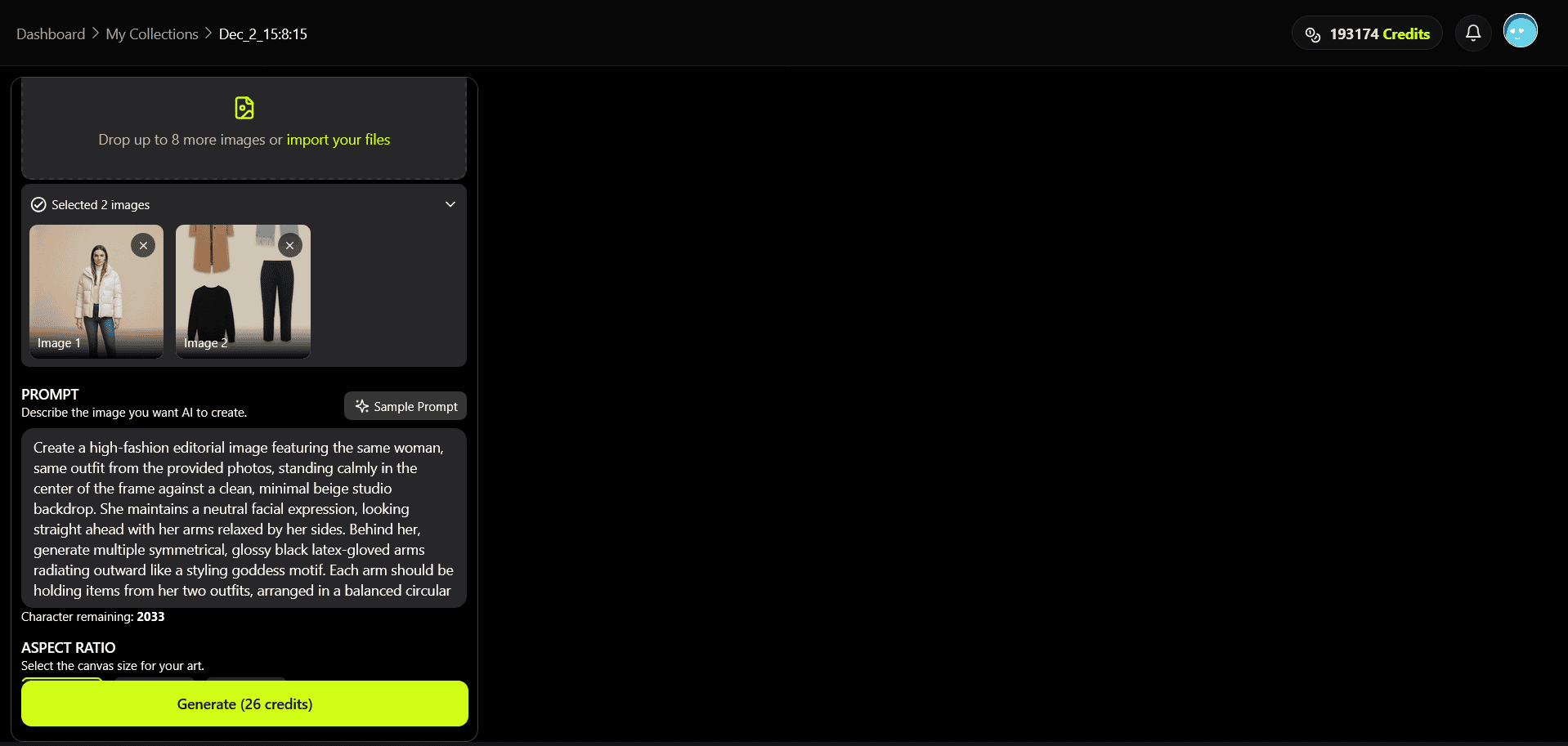
Step 4: Image Generated
An image will be generated:
Step 5: Generate First Transition Video
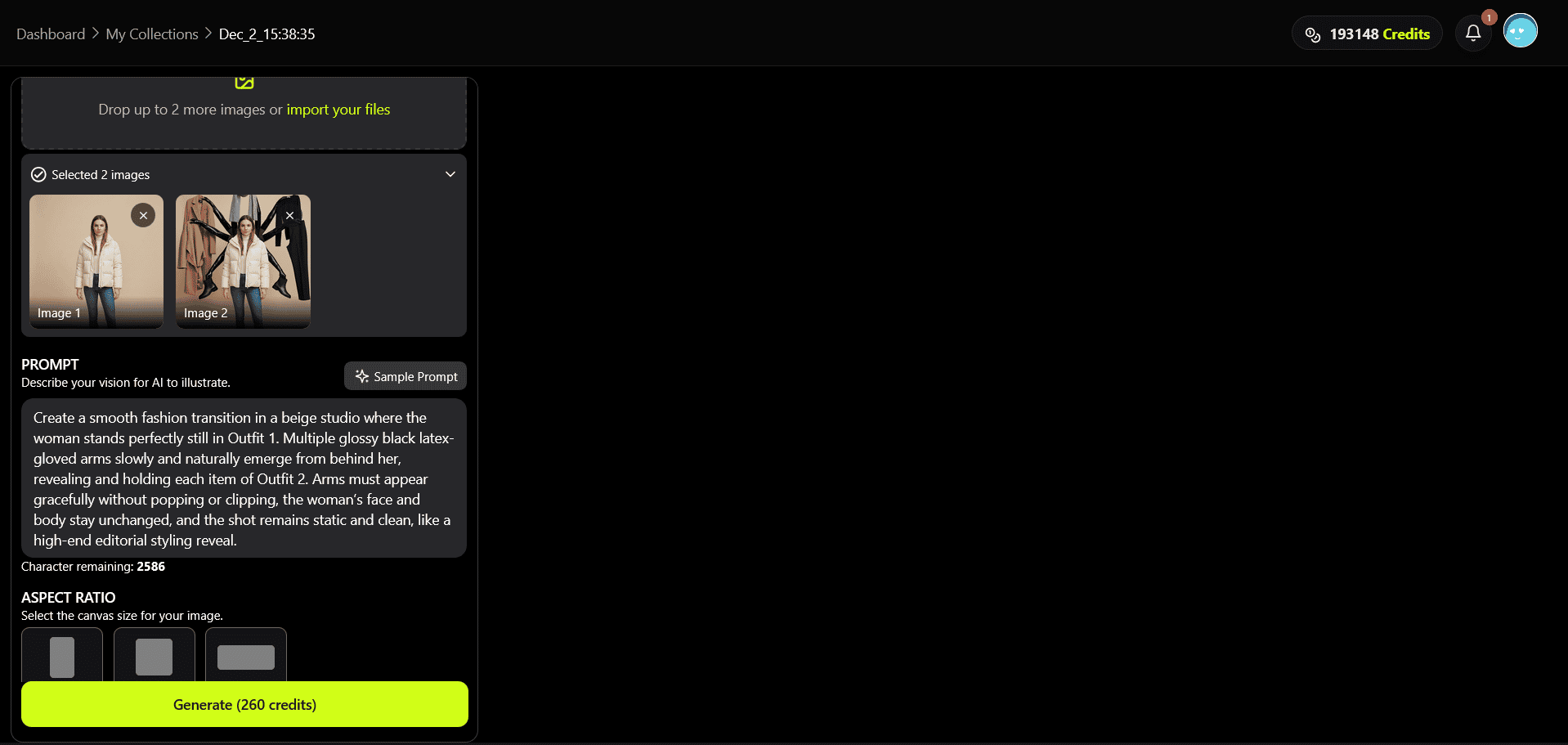
Change the model to Google Veo 3.1 and upload the base image as well as the generated image from the previous step. Then enter a prompt and click on Generate:
Prompt: "Create a smooth fashion transition in a beige studio where the woman stands perfectly still in Outfit 1. Multiple glossy black latex-gloved arms slowly and naturally emerge from behind her, revealing and holding each item of Outfit 2. Arms must appear gracefully without popping or clipping, the woman’s face and body stay unchanged, and the shot remains static and clean, like a high-end editorial styling reveal."
Output:
Bonus Tip: Add negative prompt like- avoid human, figures etc. (if needed)
Step 6: Generate Final Image
Change the model back to Nano Banana Pro and upload the base image as well as the outfit image. Then enter a prompt and click on Generate:
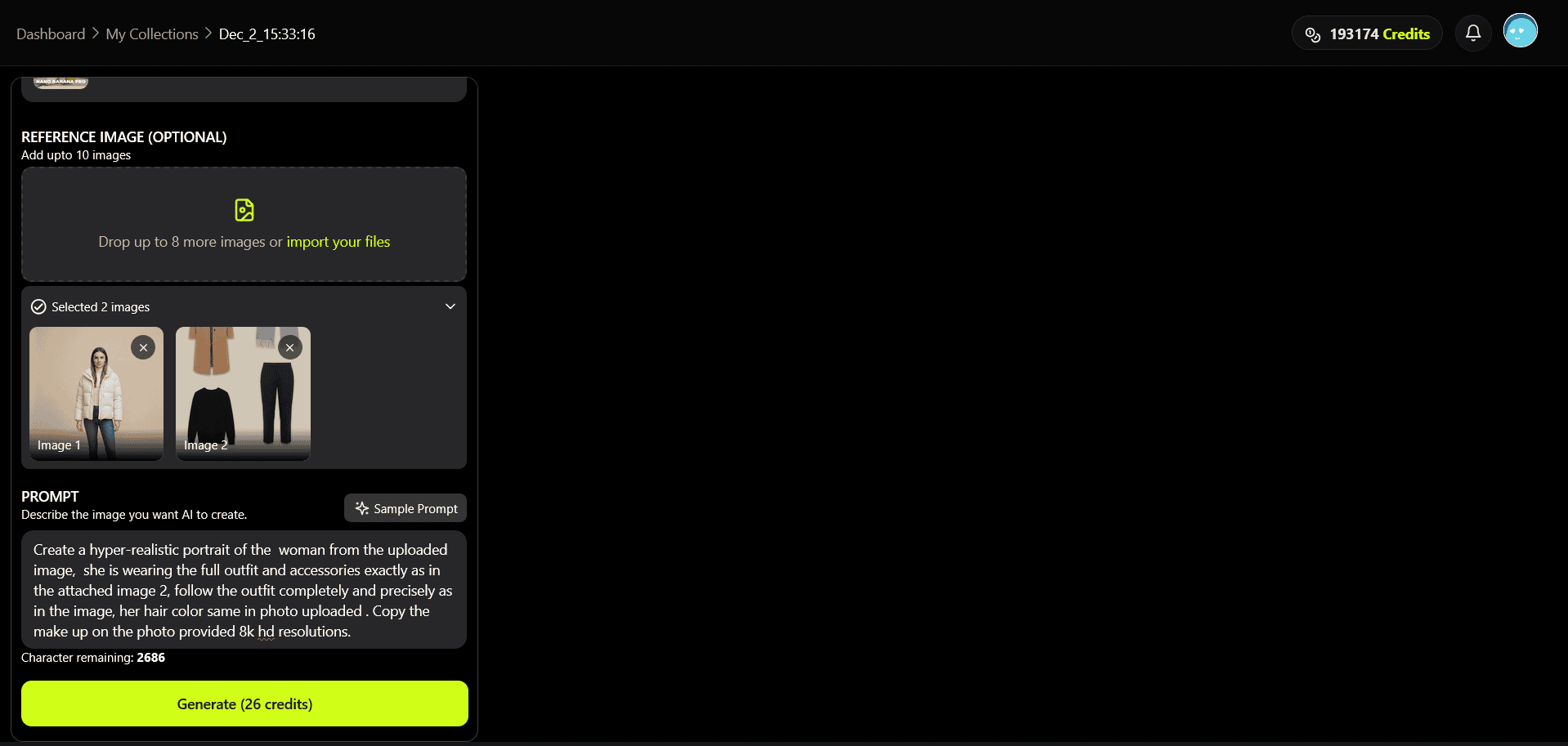
Prompt: "Create a hyper-realistic portrait of the woman from the uploaded image, she is wearing the full outfit and accessories exactly as in the attached image 2, follow the outfit completely and precisely as in the image, her hair color same in photo uploaded . Copy the make up on the photo provided 8k hd resolutions."
Output:
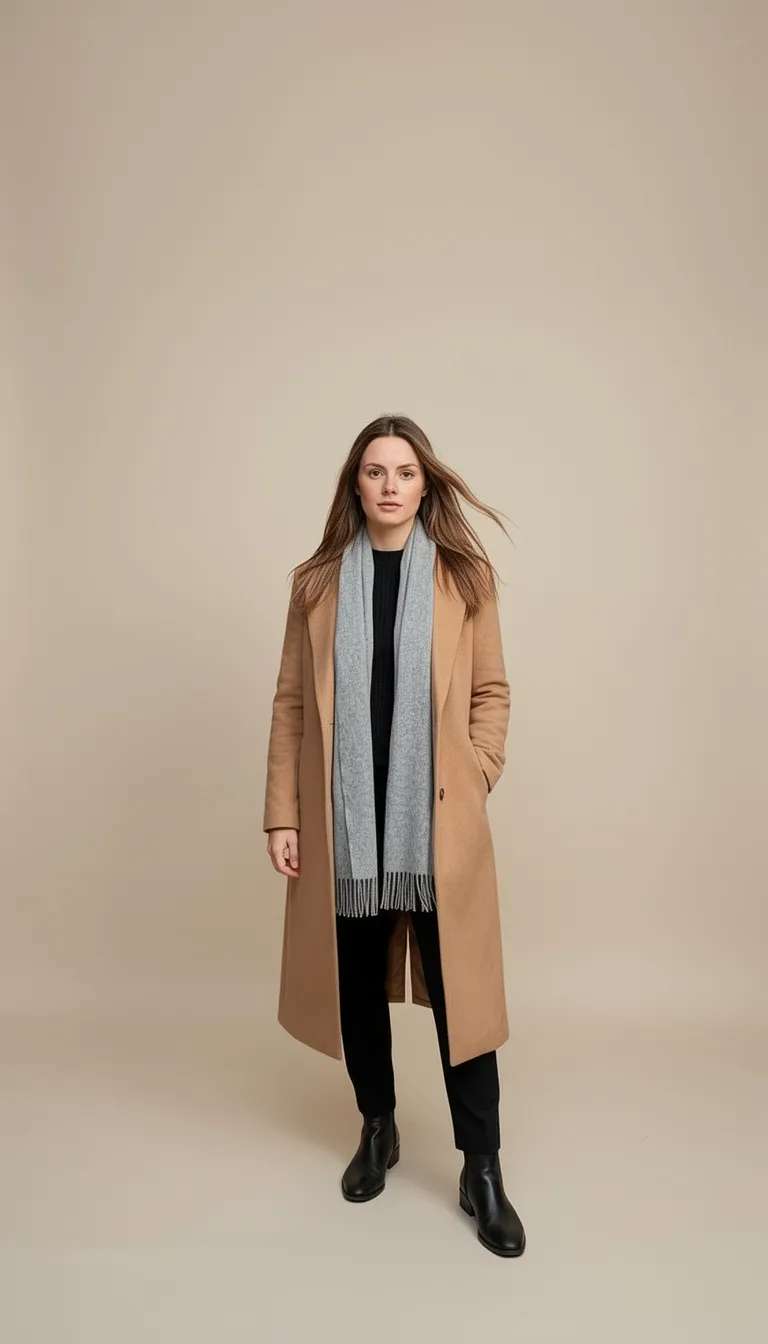
Step 7: Generate Second Transition Video
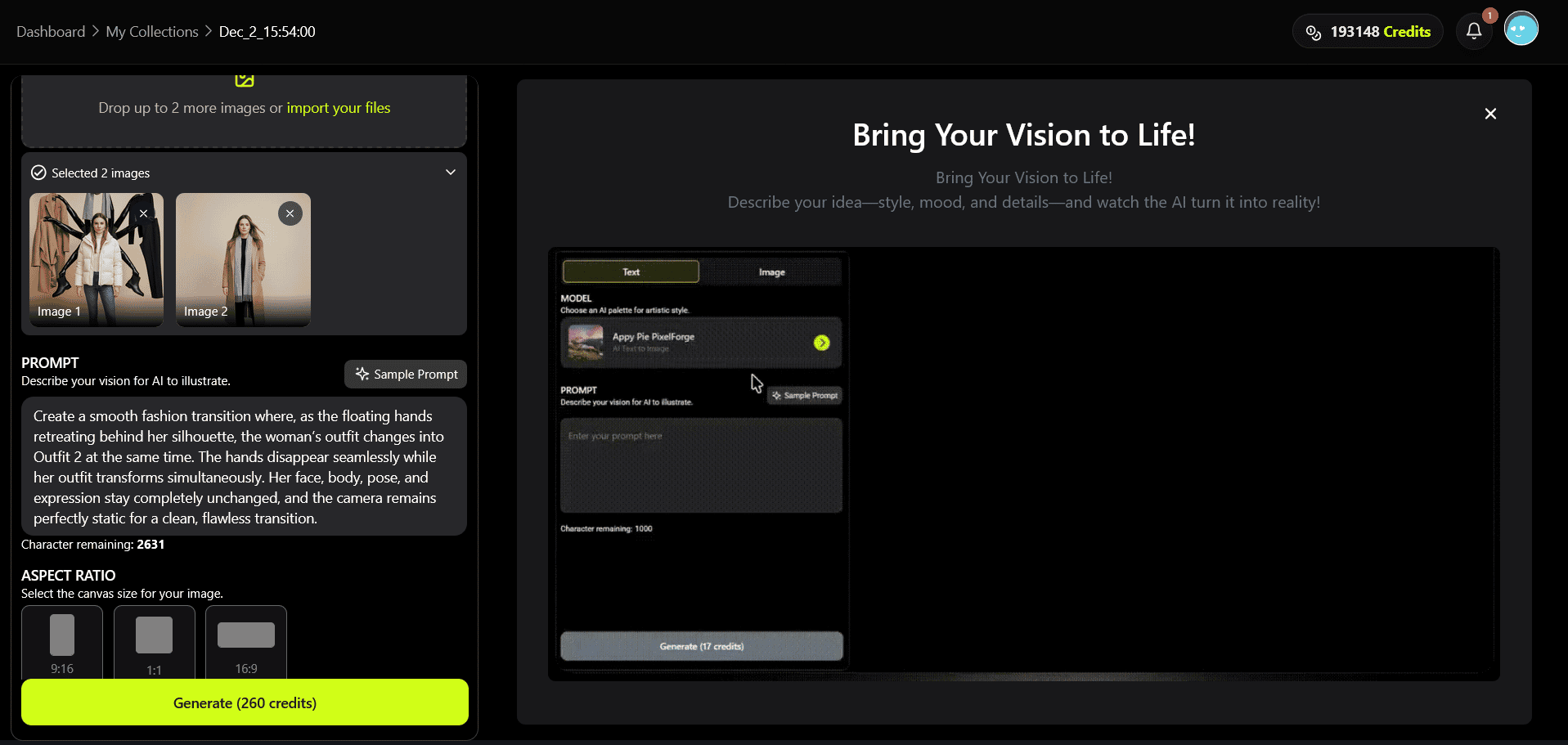
Change the model back to Google Veo 3.1 and upload the image from step 4 as well as the image generated in the previous step. Then enter a prompt and click on Generate:
Prompt: "Create a smooth fashion transition where, as the floating hands retreating behind her silhouette, the woman’s outfit changes into Outfit 2 at the same time. The hands disappear seamlessly while her outfit transforms simultaneously. Her face, body, pose, and expression stay completely unchanged, and the camera remains perfectly static for a clean, flawless transition."
Output:
Step 8: Combine the Two Videos
Once the video is generated, click on "Scene Builder" in the bottom-right corner. Then drag videos from the left hand bar and place them on the bar at the bottom. Drag them in the order you want the video to be in and you can trim any of the videos, if you don't certain parts in the videos. Once you've combined all the videos you want, click on play to preview your full-length video.
Step 7: Export and Share Your Creation
Once your video is ready, export it in high quality. Your AI cat clip is instantly shareable on TikTok, Instagram Reels, YouTube Shorts, or anywhere else your audience loves quick, entertaining content.
Output Generated
How Can These Formats Enhance a Brand’s Marketing and Storytelling?
Transition-based visuals have a distinct advantage in digital marketing: they are eye-catching and shareable. Social media algorithms often prioritize content that maintains viewer attention, and smooth outfit transitions create visual satisfaction that keeps audiences watching until the end. Meanwhile, Virtual Try-On previews reinforce product value and strengthen engagement through interactivity.
Brands can use this combination in lookbooks, ads, email campaigns, and homepage banners to establish a cohesive visual identity. Solutions like the Kolors Virtual Try-on API make the process accessible by improving realism, tone matching, and compatibility across different content formats.
By blending these tools, brands tell richer stories. They can show how a wardrobe evolves, how pieces layer, or how items transition from casual to formal styling—helping customers visualize clothing in everyday contexts.
What Creative Opportunities Do Virtual Try-On and Transition Videos Unlock?
These tools empower creators and brands to explore design directions that were previously too time-consuming or expensive. They eliminate the need for multiple photo shoots, outfit changes, or extensive editing sessions. Instead, brands generate variations quickly and present them in captivating formats.
Using powerful systems like the IDM-VTON API, brands can simulate highly accurate garments, adapt to a wide range of poses, and maintain identity consistency—even when generating large volumes of content. This reduces creative barriers and allows brands to experiment more freely with style concepts.
These innovations make it easier to produce editorial-style videos, product reveals, styling transformations, or colorway showcases—all without the overhead of traditional production environments.
How Do These Innovations Fit Into the Bigger Picture of Digital Fashion?
The fusion of virtual styling technology and dynamic fashion content is reshaping the retail landscape. As these tools mature, they expand the expectations consumers have for online shopping. Visual transformation videos offer inspiration, while VTO technology provides clarity—striking a balance between creativity and practicality.
Broader developments include improvements in garment simulation, avatar personalization, and automated styling engines. The ongoing rise of solutions such as best AI clothes changer tools makes cutting-edge visual content more accessible to smaller brands and independent creators alike.
These advancements form part of a broader trend that reflects how Virtual Try-On technology is revolutionizing the fashion e-commerce industry, enabling experiences that are intuitive, immersive, and deeply consumer-focused.
How Do These Tools Strengthen Customer Experience and Purchasing Confidence?
Customers feel more assured when they can visualize outfits clearly and dynamically. Virtual Try-On experiences reduce ambiguity, while smooth transitions showcase styling options and versatility. Together, they help solve one of the biggest challenges in e-commerce: uncertainty about how clothing will look or feel.
Furthermore, integrating modern tools into the shopping journey such as best AI Virtual Try-On rooms enhances personalization. Instead of scrolling through static images, customers can interact with clothing more naturally, leading to higher confidence and stronger emotional connections with products.
E-commerce brands that invest in these technologies often see improvements in conversion rates, reduced return rates, and increased customer satisfaction—all essential factors for long-term success.
What Are the Key Takeaways?
Virtual Try-On technology and outfit transition videos are powerful storytelling tools that help brands stand out in today’s competitive e-commerce landscape. They elevate visual appeal, support better product understanding, and create experiences that feel more engaging and emotionally impactful than traditional product images. When paired with flexible solutions such as Virtual Try-On APIs, these approaches strengthen brand identity and customer trust.
Transitions bring creativity and energy to product presentation, while Virtual Try-On systems offer clarity and confidence. The combination helps customers make informed purchasing decisions and encourages deeper interaction with apparel collections. As digital fashion technology continues to evolve, the brands that embrace these innovations will be best positioned to thrive.
Ultimately, the key takeaway is simple: immersive visuals lead to stronger customer relationships. By blending interactive try-on experiences with captivating transition content, e-commerce stores can deliver the kind of shopping experience modern consumers expect.
Frequently Asked Questions
1. Why are Virtual Try-On experiences important for online fashion stores?
They help customers visualize garments more realistically, providing clarity that reduces uncertainty and increases purchasing confidence. These experiences also enhance product understanding by giving shoppers a more personal and interactive way to explore clothing before buying.
2. Do transition videos help improve product engagement?
Yes, their dynamic nature captures attention and encourages viewers to explore the product further, increasing engagement time. By showcasing outfits in motion, they also make the shopping experience feel more lively and visually appealing.
3. Can smaller e-commerce brands use these tools effectively?
Absolutely. Many modern solutions make it easy for small brands to create professional-quality visuals without large budgets. These tools help level the playing field, enabling smaller stores to compete with larger retailers in terms of visual presentation.
4. Are Virtual Try-On tools accurate enough for shoppers to rely on?
Recent advancements have improved garment fit, lighting consistency, and realism, making them dependable sources of product insight. As technology continues to evolve, these systems are becoming even more precise and trustworthy for online purchasing decisions.
5. How do these visuals impact customer trust?
By providing clear, realistic representations of clothing, these formats build trust and help customers feel confident in their choices. When shoppers can see products displayed with accuracy and consistency, they are far more likely to complete a purchase.
Related Articles
Most Popular Posts
- Best AI Image and Video Generators in 2026
- Best AI 3D Model Generators in 2026
- Best AI Image Generation Models in 2026
- Best AI Video Generation Models in 2026
- Best Open Source Image Generation Models in 2026
- Best Open Source Video Generation Models in 2026
- Best Prompts to Create Amazing Videos using AI